
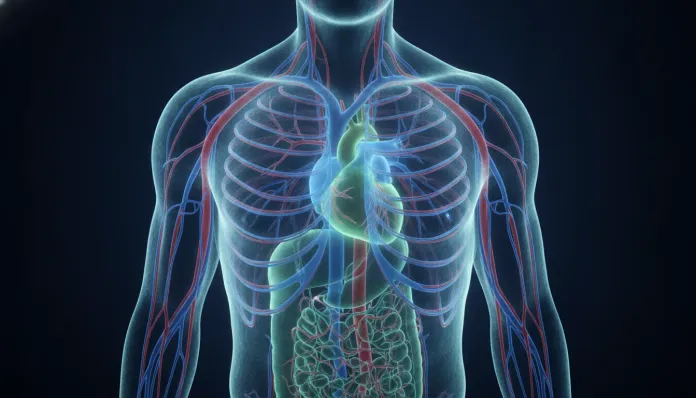
At this very moment, as you read these words, your heart beats, your lungs expand, your eyes make micro-adjustments to focus on the text, and your liver works at full speed—all without you having to think about any of it. The human body is an extraordinary precision machine, capable of executing thousands of processes simultaneously, 24 hours a day, 7 days a week, without rest and without asking for permission.
This biological autonomy keeps us alive without any conscious effort on our part. It’s so natural that we rarely stop to admire it: you don’t need to remember to make your heart beat, to digest lunch, or to regulate your body temperature. But what exactly happens behind the scenes? Science has been revealing, in increasing detail, the impressive mechanisms your body activates while you sleep, work, talk, or simply exist.
Prepare to look inside—not metaphorically, but literally and scientifically. What your body does without you noticing is, without exaggeration, one of the most fascinating stories there is.
The Heart: An Engine That Never Stops
The adult heart beats on average between 60 and 100 times per minute at rest. This means approximately 100,000 beats per day and over 35 million per year—all completely automatic. This rhythm is controlled by a group of cells called the sinoatrial node, located in the right atrium of the heart, which functions as a natural pacemaker.
With each contraction, the heart pumps oxygen-rich blood throughout the body and receives back the blood that has already served its purpose. Under normal conditions, it takes about a minute for blood to make a complete circulation through the body. During intense exercise, this frequency can double or even triple—and the adjustment happens automatically, without you having to think.
What many people don’t know is that the heart has its own nervous system, with about 40,000 neurons. For this reason, some researchers informally call it “the little brain of the body.” It can respond to hormonal and emotional signals independently, which explains why situations of stress or intense joy immediately change our heart rate.
Breathing: Automatic, Yet Adjustable
You breathe between 12 and 20 times per minute at rest—and rarely think about it. The control of breathing is primarily managed by the medulla oblongata, a structure in the brainstem that monitors carbon dioxide (CO₂) levels in the blood. When this level rises, the brain sends a signal for the lungs to breathe faster. When it falls, the rhythm decreases.
Interestingly, breathing is one of the few automatic processes that can also be consciously controlled. You can hold your breath, speed it up, or slow it down—but only to a certain limit. If CO₂ gets too high, the autonomous system takes over, regardless of your will. This is a fundamental protection of the body against involuntary suffocation.
During sleep, breathing becomes even more autonomous and may sometimes present natural pauses. When these pauses are frequent and prolonged, it characterizes a condition called sleep apnea, which should be evaluated by a doctor—after all, general information about body function is useful, but any specific symptom deserves individualized professional evaluation.
The Liver: The Silent Factory
If the heart is the engine, the liver is the factory. Located in the upper right quadrant of the abdomen, it performs more than 500 different functions continuously and silently. Among the main ones are:
- Filtering toxins and harmful substances from the blood
- Producing bile, essential for fat digestion
- Storing glucose as glycogen and releasing it when needed
- Synthesizing essential proteins, such as fibrinogen (important for blood clotting)
- Metabolizing medications and alcohol
- Regulating cholesterol levels
The liver also has remarkable regenerative capacity: it can recover even after losing a significant part of its tissue, as long as the damage is not irreversible. This makes it unique among vital organs.
The Immune System: Your Invisible Soldiers
While you read this article, your immune system is fighting microscopic battles in various parts of your body. Viruses, bacteria, fungi, and defective cells are constantly identified and eliminated—most of the time, without you feeling anything.
White blood cells (leukocytes) are the main agents of this defense. There are several types, each with a specific function:
- Neutrophils: are the first to arrive when there is an infection, acting as a frontline
- T lymphocytes: identify and destroy virus-infected cells
- B lymphocytes: produce specific antibodies against invading agents
- Macrophages: “engulf” and destroy foreign particles or cellular debris
The immune system also has memory. When you are exposed to a virus for the first time, the body learns to recognize it. The next time the same agent appears, the response is faster and more efficient—this is exactly the principle that underlies the functioning of vaccines.
The Brain Never Truly Sleeps
Even during deep sleep, the brain remains extraordinarily active. One of the most fascinating functions that occur during this period is brain cleaning, performed by the glymphatic system. Described in more detail by science in the last decade, this system uses cerebrospinal fluid to remove metabolic waste accumulated during the day—including proteins associated with neurodegenerative diseases, such as beta-amyloid, related to Alzheimer’s.
During sleep, memory consolidation also occurs: the brain organizes, filters, and stores information acquired throughout the day. This is why good sleep improves learning and why sleep deprivation impairs memory and concentration.
Additionally, the brain continuously regulates:
- Body temperature (maintained around 36.5 °C to 37 °C)
- Hormonal balance, through the hypothalamus and pituitary gland
- Blood pressure and heart rate
- Appetite and satiety, through hormones like leptin and ghrelin
Skin, Hair, and Nails: Silent and Continuous Growth
You don’t feel it, but your skin is in constant renewal. The outermost layer of the skin, the epidermis, renews completely every 2 to 4 weeks. This means you literally don’t have the same skin cells you had a month ago. Old cells are pushed to the surface and shed—household dust, by the way, is largely composed of these dead cells.
Hair grows on average 1 to 1.5 cm per month, while nails grow about 3 mm per month—more on the hands than on the feet. All this growth happens continuously, regulated by hormones, nutrition, and local blood circulation.
The Gut: The Second Brain
In recent years, science has begun to call the gut the “second brain”—and with good reason. The enteric nervous system, which lines the gastrointestinal tract, contains about 500 million neurons and can function relatively independently of the central brain.
Besides coordinating digestion, the gut communicates directly with the brain through the vagus nerve, influencing mood, behavior, and even stress responses. Most of the body’s serotonin—a neurotransmitter associated with well-being—is produced in the gut, not the brain.
The gut microbiota (the collection of trillions of microorganisms inhabiting the gut) also plays fundamental roles: it aids in fiber digestion, produces vitamins (such as K and some B vitamins), and participates in immune system regulation. It is a living, dynamic, and essential ecosystem—and it is functioning right now, without you noticing.
Conclusion: Admiring the Invisible

There is a profound beauty in realizing that life happens largely without our conscious intervention. The heart beats, the liver filters, the immune system defends, the brain consolidates memories, and the gut processes—all in harmony, all at the same time, every day of your life.
Understanding these processes is not just scientific curiosity: it’s a way to respect your own body. Habits like getting good sleep, maintaining a balanced diet, exercising, and avoiding excessive alcohol and harmful substances make a direct difference in the functioning of all these automatic systems. The body works for you—and deserves that you work for it too.
And just as the human body holds fascinating secrets in its internal processes, the world around us also hides surprising stories. If you enjoy curiosities that broaden your perspective, you might be interested in learning why the Portuguese language is so fascinating—another example of how something seemingly everyday can hold impressive richness when observed closely.
This article is for informational and educational purposes. For questions about health, symptoms, or specific conditions, always consult a qualified health professional.
- T lymphocytes: identify and destroy virus-infected cells
- Neutrophils: are the first to arrive when there is an infection, acting as a frontline