
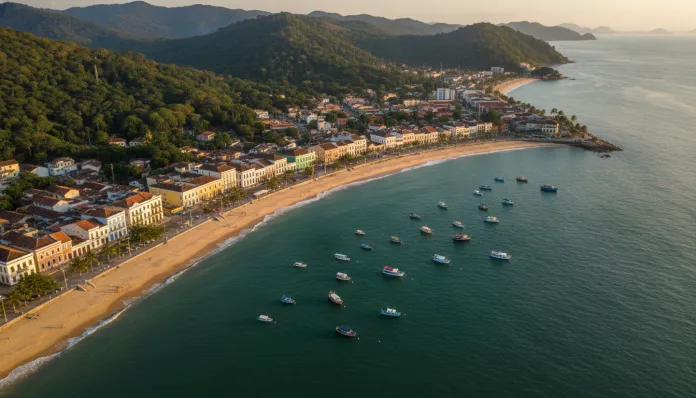
Traveling across Brazil doesn’t have to cost a fortune. With over 8.5 million square kilometers of territory, the country holds breathtaking destinations that fit any budget—deserted beaches, cool mountains, vast wetlands, and historic cities that rival any European postcard. For those wanting to explore this giant in 2026 without breaking the bank, the good news is that there are strategic routes and destinations that combine beauty, infrastructure, and affordability.
The secret lies in avoiding obvious routes and peak seasons. Destinations like Arraial do Cabo, Bonito, Chapada dos Veadeiros, and Ilha de Marajó offer unique experiences with a daily average expenditure well below what is typically spent in capitals or over-exploited tourist spots. Additionally, the growth of domestic tourism in recent years has brought more transportation options, simple accommodations, and family-run inns with excellent cost-benefit.
This guide compiles affordable travel destinations in Brazil for 2026, with practical tips on how to save on transportation, food, and lodging. If you’re planning your next vacation, long holidays, or just a weekend getaway, prepare your itinerary—and your wallet.
Northeast: Sun, Sea, and Surprising Prices
The Northeast is historically one of the most accessible regions of Brazil for domestic tourists. States like Ceará, Piauí, Maranhão, and Rio Grande do Norte host some of the country’s cheapest destinations, especially when avoiding July and December.
Jericoacoara (CE)
Despite its international fame, Jeri—as it’s affectionately called—still offers economic options for those who plan wisely. Simple inns ranging from R$ 80 to R$ 150 per couple can be found outside the high season. The village is small, meaning most of the sightseeing is done on foot, at the sunset dune or nearby lagoons, at no additional cost.
Lençóis Maranhenses (MA)
One of the most unique landscapes on the planet—white dunes with turquoise freshwater lagoons—the Lençóis Maranhenses National Park can be accessed from Barreirinhas, a city with growing infrastructure and very competitive prices. The park charges a modest entrance fee, and 4×4 tours are shared among groups, significantly reducing the cost per person.
Canoa Quebrada and Morro Branco (CE)
Less famous than Jericoacoara but with equally stunning landscapes, these Ceará destinations feature colorful cliffs, long beaches, and fresh, affordable seafood cuisine, making them perfect choices for budget travelers.
Central-West: Wild Nature at Reasonable Prices
Chapada dos Veadeiros (GO)
Located about 230 km from Brasília, Chapada dos Veadeiros is one of Brazil’s most accessible ecotourism destinations. The village of Alto Paraíso de Goiás serves as the main base, with affordable inns and restaurants offering regional food at popular prices. Trails to waterfalls like Couros and the Couros Canyon do not require mandatory guides on all sections, reducing the cost of tours.
The best time to visit is between May and September, during the dry season, when rivers are clearer and trail access is easier.
Bonito (MS)
Bonito is often cited as expensive—and indeed requires planning. However, the trip can be made feasible with strategy: book tours in advance, avoid holidays, and opt for family homes or smaller inns outside the center. The natural attractions, such as floating in the Rio da Prata and the underwater caves, justify the investment, and the mandatory pre-booking system is well established.
Southern Brazil: Surprises for the Budget Traveler
The South is often overlooked by those seeking economy, but it hides high-value destinations at accessible costs.
São Francisco do Sul (SC)
One of Brazil’s best-preserved historic centers, São Francisco do Sul is on the Santa Catarina coast and combines beaches, colonial architecture, and gastronomy. Overshadowed by more famous destinations like Florianópolis and Balneário Camboriú, prices here are considerably lower, especially in the low season (from March to November, outside the summer).
Guarapuava and the Campos Gerais (PR)
Less touristy and therefore cheaper, the interior of Paraná offers impressive natural attractions: the Guartelá State Park, considered one of Brazil’s longest canyons, can be visited at minimal cost. The region is ideal for those traveling by car and preferring the tranquility of rural tourism.
Southeast Off the Beaten Path: Accessible Historical and Cultural Riches
Ouro Preto and Tiradentes (MG)
Minas Gerais hosts a unique Baroque ensemble in the world, and cities like Ouro Preto and Tiradentes are accessible to any budget. Historic churches have free or symbolic entry fees, and the local cuisine—featuring the famous feijão tropeiro, chicken with brown sauce, and artisanal sweets—is plentiful and cheap.
The state as a whole has a network of family-run inns with very competitive prices, especially in the interior cities.
Cunha and Bananal (SP — Vale do Paraíba)
The São Paulo mountains, with historic cities and Atlantic Forest-covered ranges, are an excellent option for those living in São Paulo who want to escape without spending much. Cunha is known for its artisanal ceramics and trails in the Atlantic Forest. Bananal has one of the most preserved 19th-century coffee farm complexes in the country.
Northern Brazil: Eco-Tourism at the Frontier
Alter do Chão (PA)
Known as the “Caribbean of the Amazon,” Alter do Chão is near the city of Santarém, Pará, and offers freshwater beaches in the middle of the Amazon rainforest. The tourist infrastructure is well-established, with cheap inns, fresh fish restaurants, and affordable boat tours. The best time is the dry season, between August and November, when the freshwater beaches are larger.
Ilha de Marajó (PA)
The world’s largest fluvial-marine island, Marajó is an uncommon destination that combines buffaloes, mangroves, beaches, and riverine culture. Packages departing from Belém are relatively cheap and include boat crossings, simple accommodations, and tours. For travelers seeking something truly different, the island is one of the best choices for 2026.
Practical Tips for Saving on Travel
Regardless of the destination, some strategies help reduce the total cost of the trip without compromising the experience.
- Book tickets in advance: For destinations with flights, searching 60 to 90 days in advance usually results in significant savings.
- Avoid July, December, and Carnival: The high season raises accommodation and service prices by up to 100% in some destinations.
- Choose intercity buses: Brazil has one of the best long-distance bus networks in the world, with sleeper and semi-sleeper options at competitive prices.
- Use collaborative lodging apps: Shared room or entire house rental platforms can significantly reduce costs in established tourist destinations.
- Eat at fairs and local markets: In almost all of Brazil, street fairs and municipal markets offer typical meals at popular prices.
- Group tours: In destinations like Bonito and Lençóis Maranhenses, combining tours with other hostel or inn travelers is common practice and significantly reduces individual costs.
- Travel outside weekends: In beach destinations near large cities, accommodation prices drop considerably from Monday to Thursday.
How to Plan a Budget-Friendly Itinerary in Brazil
- Define the region based on the time of year: the Northeast is best from July to December (outside the rainy season); the South and Southeast work well year-round; the North is best visited in the second half of the year.
- Set a realistic daily budget—a simple trip through the Brazilian interior can cost between R$ 120 and R$ 250 per person per day, including lodging, food, and local transportation.
- Research bus routes before opting for flights. Many destinations are well-connected by bus stations, and the cost is a fraction of air travel.
- Check national park entry periods—some require advance booking, like Chapada dos Veadeiros and Lençóis Maranhenses.
- Create an itinerary with a base city: instead of moving every day, focus on one city and take day trips from there.
- Talk to locals: Community-based tourism is growing in Brazil, and often the best—and cheapest—tours are organized directly with local guides.
Conclusion: Brazil Fits Your Budget
Traveling across Brazil in 2026 on a reduced budget is not only possible but can be one of the most enriching experiences of a lifetime. The country boasts a geographical and cultural diversity that few places in the world can rival—and much of this richness is accessible to those who plan carefully.
The key is anticipation: researching outside peak seasons, diversifying transportation means, appreciating local cuisine, and preferring nature tourism over consuming expensive services are choices that, together, make a huge difference in the total cost of the trip. For this, organization and productivity in planning are essential—just like any worthwhile project, something you can develop with simple habits to be more productive at work and apply in daily life.
From Alter do Chão to the mountains of Minas, from the Goiás savannah to the cliffs of Ceará, Brazil has affordable destinations that still retain the authenticity that major tourist centers have lost. Just choose the direction—and go.
- Set a realistic daily budget—a simple trip through the Brazilian interior can cost between R$ 120 and R$ 250 per person per day, including lodging, food, and local transportation.
- Avoid July, December, and Carnival: The high season raises accommodation and service prices by up to 100% in some destinations.


