
Every day, tons of materials are discarded in homes, offices, and streets across Brazil. Plastic packaging, cardboard, aluminum cans, glass jars—each of these items has a destination, and that destination can vary greatly depending on how the waste is sorted before being thrown away. Recycling exists precisely to transform this material, which would otherwise be lost, back into something useful, closing the product life cycle and reducing the environmental impacts of industrial production.
But how does this process actually work? From the moment you place paper in the blue bin until it becomes a new cereal box or notebook, there is an entire chain of steps, people, and technologies involved. Understanding this path helps not only to recycle better at home but also to comprehend why properly sorting waste makes a real difference in the system’s efficiency.
This article clearly and accessibly explains how recycling works in Brazil—from collection to material transformation—and what each person can do to contribute to this cycle.
What Recycling Is and Why It Matters
Recycling means reprocessing materials that have already been used so they can be utilized as raw materials in the production of new products. Contrary to what many people think, recycling is not just an environmental issue: it also has a direct economic impact, as it reduces the need to extract new natural resources and generates income for millions of workers in Brazil.
The solid waste sector is regulated in the country by the National Solid Waste Policy (PNRS), established by Law No. 12,305 of 2010. This legislation establishes principles such as shared responsibility for the product life cycle, prioritizing waste prevention, and valuing recycling as an alternative to final disposal in landfills.
The main benefits of recycling include:
- Reduction of waste volume sent to landfills, extending the lifespan of these sites
- Energy savings: producing aluminum from recycled cans consumes about 95% less energy than producing it from bauxite ore
- Preservation of natural resources, such as wood, minerals, and oil
- Job and income generation, especially for recyclable material collectors
- Reduction of pollution of soil, water, and air caused by improper disposal
Types of Recyclable Materials
Not all waste can be recycled, and knowing how to differentiate material types is the first step to proper sorting at home.
Common Recyclable Materials
- Paper and cardboard: newspapers, magazines, cardboard boxes, notebook sheets, wrapping paper (without excessive gloss)
- Plastic: PET bottles, cleaning product containers, bags, yogurt pots—identified by numbers 1 to 7 on packaging, indicating the type of polymer
- Metal: aluminum cans (soda, beer), tin cans (canned food), metal lids
- Glass: bottles, jars, and glass containers in general
What is not Recyclable by Conventional Systems
- Greasy paper (like used pizza boxes)
- Mirrors and tempered glass
- Diapers and sanitary pads
- Fluorescent bulbs (require special disposal)
- Organic waste mixed with recyclables
- Styrofoam (not collected in many municipalities)
Contamination of recyclable materials with food scraps or other waste is one of the biggest problems in the system. A single dirty item can render a large amount of properly separated material unusable.
Selective Collection: How Waste Leaves Home
Selective collection is the system by which recyclable waste is collected separately from regular organic waste. In Brazil, most municipalities adopting this model use separation into two broad categories: dry (recyclables) and wet (organics and rejects).
In many cities, selective collection is carried out by municipal trucks on specific days of the week. In others, residents take materials to ecopoints or voluntary delivery points (PEVs), structures scattered throughout the municipality where different types of material can be deposited.
There is also a third essential channel: cooperatives and associations of collectors. These groups roam streets and neighborhoods collecting recyclable material and represent a significant portion of recycling in the country. According to sector data, most recycled material in Brazil passes through the hands of informal collectors before reaching industries.
Inside Sorting Centers
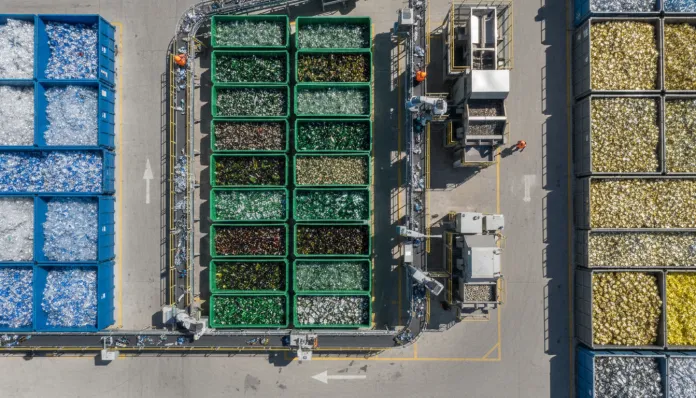
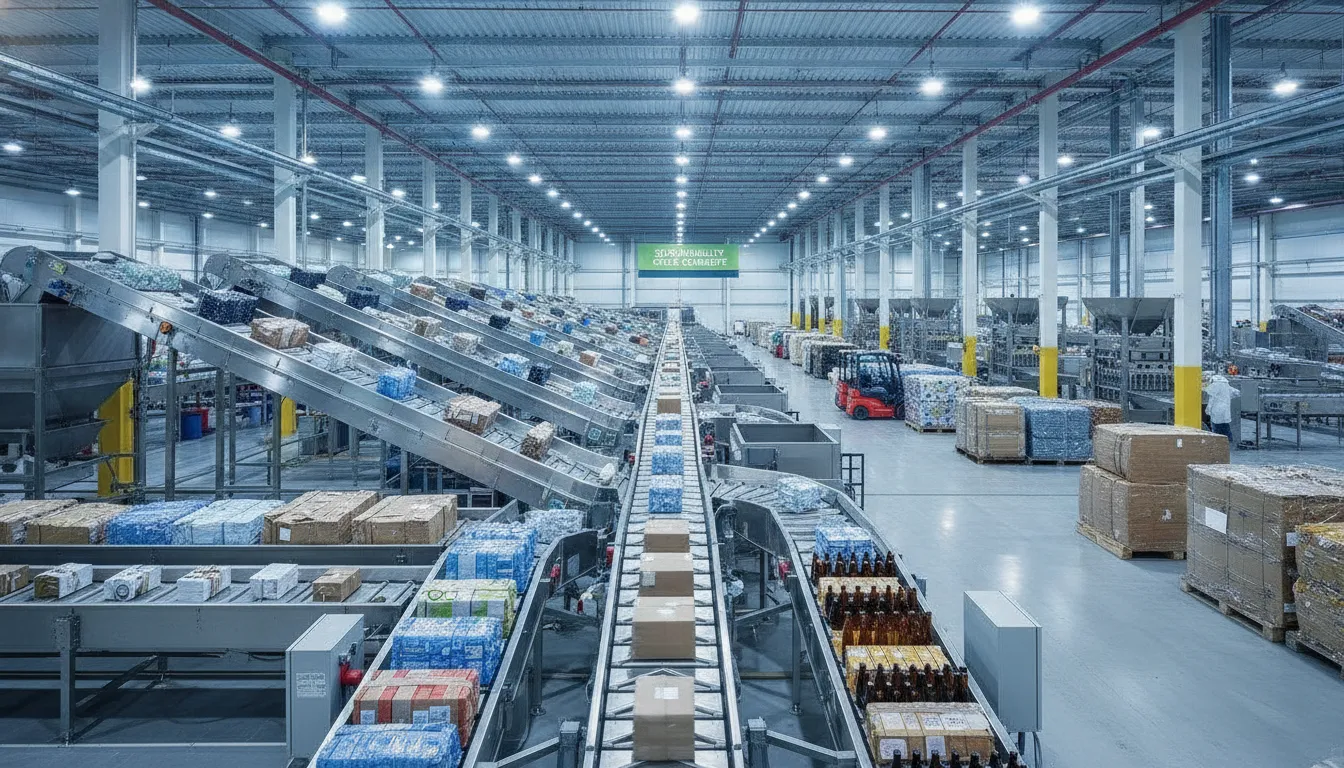
Once collected, the material goes to sorting centers (or sorting warehouses), where it undergoes detailed classification before being sent to the recycling industry.
In these facilities, the process generally works as follows:
- Receiving and weighing: the material arrives in trucks and is weighed to control the quantity received
- Bag opening and spreading: waste is placed on conveyors or light shredders for initial separation
- Manual sorting: workers (often cooperated) separate materials by type—paper, plastic, metal, glass
- Specific type separation: within each category, there are subdivisions; for example, plastic is separated into PET, HDPE (milk bottles, for example), PVC, and others
- Pressing and baling: sorted materials are compacted into bales for easier transport and storage
- Commercialization: bales are sold to recycling industries that will process the material
Some modern centers use magnetic separators (for ferrous metals), Eddy currents (for aluminum), and even artificial intelligence and computer vision systems to identify and separate materials automatically, increasing process efficiency.
How Each Material is Transformed
The transformation process varies according to the type of material.
Paper and Cardboard
Recyclable paper is mixed with water in large tanks, forming a paste called secondary cellulose. This paste is filtered to remove impurities, treated, and then processed in machines that form new sheets or packaging. Recycled paper can return as cardboard boxes, toilet paper, kraft paper, and other products.
Plastic
Plastics are washed, shredded into flakes or granules, and melted to form recycled plastic resin, which is used in the production of new products. PET bottles, for example, can become synthetic fibers used in clothing, carpets, and even pillow stuffing, in addition to new packaging.
Aluminum
Cans are melted in high-temperature furnaces and transformed into aluminum ingots, which are rolled into new sheets. Brazil is historically one of the largest recyclers of aluminum cans in the world, with recycling rates often exceeding 90% of cans produced.
Glass
Glass is crushed into fragments called cullet or calcim. This material is mixed with virgin raw materials (sand, limestone, and soda ash) and melted in furnaces at temperatures above 1,000°C to produce new containers. One advantage of glass is that it can be recycled indefinitely without losing quality.
The Role of Collectors in the Brazilian System
It would be impossible to discuss recycling in Brazil without highlighting the central role of recyclable material collectors. Sector estimates indicate that there are hundreds of thousands of collectors working in the country, many of whom are organized in cooperatives and associations, such as those affiliated with the National Movement of Recyclable Material Collectors (MNCR).
These workers roam streets, collect materials door-to-door, and ensure that much of the potentially recyclable material does not end up in landfills. In addition to their environmental contributions, they play a significant economic role within the recycling chain.
The PNRS formally recognizes the importance of collectors and establishes guidelines for integrating these organizations into municipal selective collection systems—although full implementation remains a challenge in many cities.
What You Can Do in Practice
Recycling efficiently at home requires some simple care, but it makes a real difference to the system:
- Clean packaging before discarding: remove food scraps from jars, bottles, and cans
- Dry materials whenever possible to avoid mold and contamination
- Crush or flatten packaging to save space in collection
- Separate glass from other recyclables to avoid accidents during sorting
- Remove plastic caps from PET bottles and discard them separately (many different materials are recycled through different paths)
- Do not mix organics with recyclables; food scraps in the recycling bag can contaminate and render all material unusable
- Check your municipality’s system for selective collection days and nearby ecopoint locations
Conclusion
Recycling is a system that only works when all links in the chain do their part—from consumers who sort correctly at home, through collectors and cooperatives, sorting centers, to industries that transform the material back into products. Each stage depends on the previous one, and a failure at the beginning—like a greasy package mixed with paper—can compromise the work of many along the way.
Understanding how the process works is the best way to make more conscious choices in daily life. And contrary to what it seems, individual contribution has a real collective impact: cities with higher population adherence to selective collection can recycle more material, reduce landfill disposal costs, and generate more work and income within the community itself.
Recycling does not solve all environmental problems—but it is a fundamental piece of a more responsible and sustainable consumption model. Knowing the rules of the game is the first step to playing better.
- Dry materials whenever possible to avoid mold and contamination
- Bag opening and spreading: waste is placed on conveyors or light shredders for initial separation
- Receiving and weighing: the material arrives in trucks and is weighed to control the quantity received
- Plastic: PET bottles, cleaning product containers, bags, yogurt pots—identified by numbers 1 to 7 on packaging, indicating the type of polymer
- Energy savings: producing aluminum from recycled cans consumes about 95% less energy than producing it from bauxite ore