

Why Your Home Never Seems Tidy — and What to Do About It
You spend the entire weekend cleaning, organizing drawers, washing dishes, mopping the floor — and by Tuesday, the house already looks chaotic again. This feeling is more common than it seems, and it’s not due to a lack of effort or goodwill. Most of the time, the problem isn’t with the cleaning itself, but with the absence of a continuously functioning organization system.
The difference between a home that stays tidy and one that constantly accumulates clutter rarely has to do with the size of the space, the number of residents, or even the available time. It almost always lies in daily habits — small decisions and repeated actions that, when combined, create a functional and pleasant living environment. This article is about how to set up this system, adapt it to your routine, and, most importantly, maintain it without relying on major weekly cleanings.
If you’ve tried everything and the clutter still wins, don’t be discouraged. Domestic organization is a skill that can be learned and practiced, not a personality trait that you either have or don’t have.
The Most Common Mistake: Confusing Cleaning with Organization
Before any practical tips, it’s essential to understand that cleaning and organization are different things, although they complement each other. Cleaning is about removing dirt — sweeping, washing, disinfecting. Organization is about giving each object a defined place and ensuring it always returns to that place.
A house can be clean and completely disorganized at the same time. And, more importantly: a disorganized house accumulates dirt faster, because surfaces full of objects are harder to clean and attract dust more easily.
Therefore, the starting point for any transformation in the home environment must be organization — and only then does cleaning come in as maintenance of this state.
The “Fixed Places” Method: The Foundation of Everything
The most efficient principle for keeping the house tidy is simple to state but requires consistency to practice: every object in the house needs a fixed place, and that place should make sense within the routine of those living there.
This seems obvious, but most homes have dozens of “homeless” objects — that charger that’s sometimes in the living room, sometimes in the bedroom; the scissors that disappear and reappear in different places; the remote control that became a nomad. Each object without a fixed place is a constant source of disorder.
How to Efficiently Define Fixed Places
- Make a mental (or physical) inventory of the most used objects — keys, documents, chargers, medications, basic tools.
- Define where each should be based on use, not aesthetics. The scissors you use in the kitchen should stay in the kitchen, not in a pretty drawer in the office.
- Create “entry and exit” points — a specific place near the door for keys, bags, and everyday items prevents these objects from spreading around the house.
- Review the places as the routine changes. What worked in 2024 may not work for your current routine.
Decluttering and Letting Go: The Step Everyone Avoids
Efficient organization doesn’t exist in a space with an excess of objects. This is one of the most ignored — and one of the most transformative — points. Before buying organizing boxes, baskets, and dividers, it’s necessary to reduce the volume of what’s there.
Letting go is difficult because objects carry memories, guilt (“I paid a lot for this”) or hope (“I’ll use it someday”). But keeping unused objects has a real cost: they take up space, make cleaning difficult, and create a permanent sense of clutter.
Practical Criteria for Deciding What Stays and What Goes
- Used in the last 12 months? If not, it’s a strong candidate for disposal.
- Unnecessarily duplicated? Four wooden spoons in the same drawer, for example.
- Broken or damaged beyond use? Hard to admit, but common in many homes.
- Exists only out of guilt or obligation? A gift you don’t like but keep “out of politeness”.
Objects in good condition can be donated, sold, or exchanged. Conscious disposal, besides freeing up space, can benefit others.
The Logic of Daily Maintenance: Small Actions, Big Results
A weekly intense cleaning might be necessary, but it never replaces daily maintenance. It’s the accumulation of small daily actions that determines whether the house will be presentable on Wednesday night or only in Sunday photos.
Some of these actions take less than two minutes each:
- Make the bed as soon as you wake up
- Wash (or put in the machine) used utensils immediately after use
- Put clothes in the right place after taking them off — not “on the chair”
- Quickly wipe the bathroom sink after brushing your teeth
- Empty your bag or backpack when you get home
- Pick up out-of-place objects before bed (the so-called “night reset”)
This last habit — the night reset — deserves special attention. Spending 10 to 15 minutes before bed to return objects to their places, throw out the trash, and leave the kitchen minimally organized ensures the next day starts in a functional environment, significantly reducing morning stress. This principle directly connects to the impact of the morning routine on well-being — something we explore in more depth in the article on healthy morning routine: simple habits that work.
Zone Organization: How to Divide the House for Easier Maintenance
An approach that works well for those who struggle to maintain discipline is to divide the house into zones of responsibility and rotate the maintenance focus throughout the week. Instead of trying to clean everything at once on the weekend — which is exhausting and creates resistance — each day has a priority zone.
Day of the Week Priority Zone Monday Living Room and Entrances Tuesday Kitchen and Pantry Wednesday Bathrooms Thursday Bedrooms Friday Service Areas Saturday Quick General Cleaning Sunday Rest / Minimal Maintenance This model isn’t rigid — it can and should be adapted to the reality of each home and family. The central point is to distribute the effort so it doesn’t concentrate in a single moment.
Products and Tools: What’s Really Worth It
The home organization market is huge and full of creative solutions — some genuinely useful, others just aesthetically pleasing. Before buying any organizing item, it’s worth reflecting: is the problem lack of space or excess of objects?
If it’s excess of objects, the solution is disposal — not more organizers. If it’s genuinely lack of space or dividers, some products make a real difference:
- Drawer dividers — transform chaotic drawers into functional spaces, especially in kitchens and offices.
- Labeled boxes — make it easy to find and return objects, especially on shelves and storage cabinets.
- Adhesive hooks — solve the problem of “homeless” clothes and accessories without requiring construction.
- Ceiling organizers in service areas — utilize often wasted vertical space.
- Open baskets — more practical than lidded boxes for frequently used items, as they reduce the friction of storing and retrieving.
A useful rule: before buying an organizer, measure the space and define what will go inside it. Buying organizers without a prior plan usually creates more clutter, not less.
Organization and Mental Health: The Connection Science Confirms
The relationship between physical environment and mental state has been recognized by health and psychology professionals for decades. Generally — and always remembering that individual cases should be evaluated by a health professional — disorganized and visually overloaded environments tend to increase stress, hinder concentration, and can contribute to feelings of overwhelm and anxiety.
On the other hand, an organized and predictable environment offers a sense of control over one’s space, positively impacting mood and productivity. It’s no coincidence that many people report feeling calmer and more focused after organizing a room — this connection between order in space and mental clarity also relates to the ability to maintain focus and concentration in daily life.
This doesn’t mean the house needs to be impeccable all the time — it’s impossible and, frankly, too exhausting to be sustainable. It means that having basic systems functioning reduces the cognitive load of living in that space.
Conclusion: Consistency Over Perfection
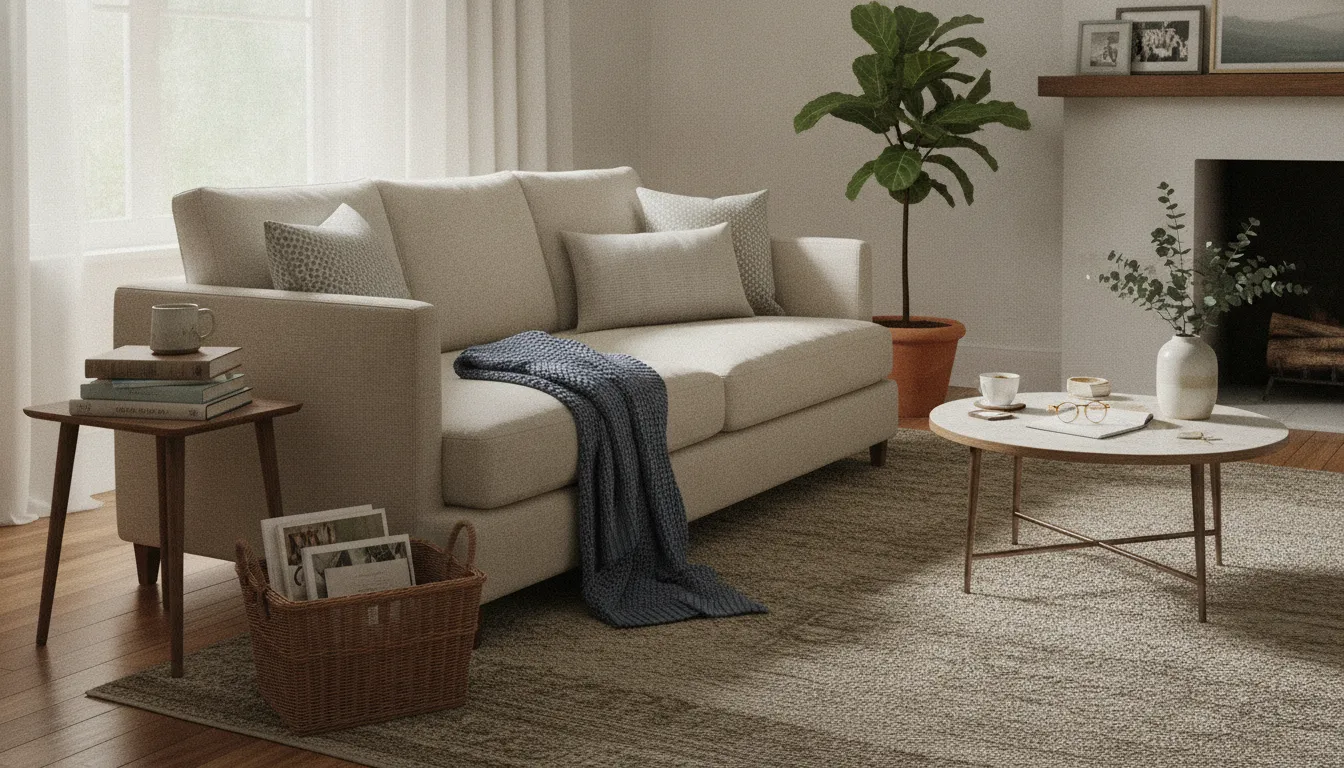
A consistently tidy home isn’t the result of occasional deep cleaning or a heroic weekend of organization. It’s the outcome of small, consistent systems applied daily that become automatic over time.
The journey begins with two essential movements: reducing what exists and defining where each thing belongs. From there, maintenance becomes exponentially easier — because there are fewer objects to store and each has a clear destination.
There’s no universal method. The best organization system is one you can realistically follow, adapted to your space, routine, and the number of people living with you. Start with the room that bothers you the most, apply the basic principles, and observe the cascading effect that order in one environment produces in others.
The tidy home you envision doesn’t require perfection — it only requires consistency.
Veja os tópicos [hide]
- Why Your Home Never Seems Tidy — and What to Do About It
- The Most Common Mistake: Confusing Cleaning with Organization
- The “Fixed Places” Method: The Foundation of Everything
- How to Efficiently Define Fixed Places
- Decluttering and Letting Go: The Step Everyone Avoids
- Practical Criteria for Deciding What Stays and What Goes
- The Logic of Daily Maintenance: Small Actions, Big Results
- Zone Organization: How to Divide the House for Easier Maintenance
- Products and Tools: What’s Really Worth It
- Organization and Mental Health: The Connection Science Confirms
- Conclusion: Consistency Over Perfection
Mais Lidas
O Jornal Meia Hora é um portal de notícias que oferece informações atualizadas sobre política, economia, esportes, entretenimento e mais. Nosso compromisso é manter nossos leitores informados com notícias precisas e imparciais.
Redação
Trending
Categorias
© Jornal Meia Hora. Todos os direitos reservados.
- Labeled boxes — make it easy to find and return objects, especially on shelves and storage cabinets.
- Drawer dividers — transform chaotic drawers into functional spaces, especially in kitchens and offices.
- Unnecessarily duplicated? Four wooden spoons in the same drawer, for example.
- Used in the last 12 months? If not, it’s a strong candidate for disposal.


