
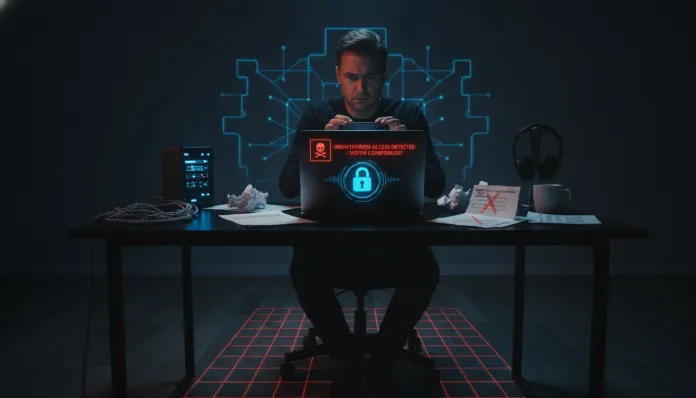
You receive a message on WhatsApp from an unknown number. The sender claims to be your bank, stating that your account has been blocked and asking you to click a link to resolve the issue immediately. Your heart races. The urgency seems real. And that’s exactly what scammers count on: that fear will outweigh common sense.
Digital scams have become one of the biggest security problems in the contemporary world. In Brazil, millions of people are affected each year by fraud ranging from fake messages in messaging apps to cloned bank and online store pages. The sophistication of these traps has grown significantly with technological advances, especially with the use of artificial intelligence to create increasingly convincing fake messages, voices, and even faces.
The good news is that most scams follow recognizable patterns. Knowing how to identify them is the first and most powerful step to avoid falling for them. This guide brings together the most common types of digital fraud and, most importantly, what you can do to protect yourself.
The Most Common Scams in the Digital Environment
Phishing: The Virtual Hook
Phishing (from the English fishing) is one of the oldest and still most effective techniques in the world of digital scams. It works like this: the criminal sends a message — via email, SMS, WhatsApp, or social networks — pretending to be a company, bank, government agency, or even someone the victim knows.
The message usually contains a link that leads to a fake page, visually identical to the original. By entering their data there, the victim hands it directly to the scammer.
Common examples of phishing in Brazil:
- Fake messages from the Federal Revenue Service informing “pending issues with CPF”
- Bank emails requesting “registration updates”
- Fake notifications of charges in the name of the Post Office or telephone operators
- Links promising coupons, promotions, or prizes in the name of major retailers
WhatsApp Cloning Scam
In this scam, the criminal obtains the victim’s phone number and attempts to transfer the WhatsApp account to their own device. To do this, they send an SMS with a verification code and then contact the victim pretending to be a legitimate company or service, asking the victim to share the code.
With the cloned account, the scammer starts communicating with the victim’s contacts, asking for borrowed money or creating other urgent situations. Since the message comes from a known number, people tend to trust it.
Fake Technical Support
The victim receives a call or message from someone posing as a technician from a well-known company — a bank, an internet provider, or even a major tech company. The “technician” claims to have detected a serious problem with the person’s device or account and offers immediate help.
To “solve the problem,” they request remote access to the victim’s computer or phone — and from there, they can steal passwords, bank data, and install malicious programs.
Scams with PIX and Fake Transfers
PIX has greatly facilitated the financial lives of Brazilians, but it has also opened new opportunities for scammers. Among the most common are:
- Fake PIX receipt: the scammer sends an edited receipt of a transfer that never happened, pressures the seller, and requests the product before the transaction is confirmed
- Wrong PIX: the criminal claims to have transferred money by mistake and asks for a refund, but the initial transfer never occurred or was made with stolen data
- Social engineering with fake attendant: the victim is convinced to make a PIX “for protection” of the account, when in fact they are sending money directly to the scammer
Fake Profiles and Stores on Social Media
With the growth of commerce on social media, fake stores on Instagram, Facebook, and TikTok have also proliferated. They use real product photos, fabricated testimonials, and prices well below market to attract buyers.
After payment — usually requested via PIX or deposit — the product never arrives, and the profile disappears or blocks the victim.
How to Identify a Scam Attempt
Digital scams, no matter how sophisticated they seem, often share some characteristics. Pay attention to these warning signs:
- Exaggerated urgency: messages that demand immediate action (“your account will be blocked in 2 hours”) are a classic sign of manipulation
- Spelling errors or strange formatting: even with AI use, many fraudulent messages still have errors or unnatural language
- Links with suspicious addresses: a real bank link will never have an address like
bradesco-seguro.net oritau-atendimento.xyz- Request for sensitive data: legitimate banks and companies never ask for passwords, verification codes, or full card numbers via message
- Offers too good to be true: products at half price, unexpected prizes, easy jobs with high salaries — always be suspicious
Step-by-Step: What to Do When You Receive a Suspicious Message
- Do not click any links before verifying the source of the message
- Access the official website or app of the institution directly, typing the address in the browser — never through the received link
- Call the official number of the company or bank to confirm if the communication is genuine
- Do not share verification codes with anyone, under any circumstances
- Block and report the number or profile on platforms (WhatsApp, Instagram, email)
- If you have already clicked the link, immediately change the passwords of accounts that may have been accessed and contact your bank
- File a Police Report — it can be done online in most Brazilian states
Tools and Habits to Protect Yourself Daily
Digital protection doesn't require being a tech expert. Some simple habits make a huge difference:
- Enable two-step verification in all apps that offer this option — WhatsApp, email, social networks, and banks
- Use different passwords for each service and consider a reliable password manager
- Keep the operating system and apps updated: updates often fix security flaws
- Be wary of public Wi-Fi networks for accessing banking services or making purchases
- Install antivirus software on computers and, if possible, on your phone
- Check app permissions: a flashlight app doesn't need access to your contacts or camera
- Check store reputations on sites like Reclame Aqui before buying
What to Do If You've Fallen for a Scam
Realizing you've been scammed is distressing, but acting quickly can minimize the damage:
- Contact your bank immediately to block cards, passwords, and suspicious transactions. In the case of PIX, the bank can activate the Special Return Mechanism (MED), created by the Central Bank of Brazil for fraud cases
- Change all passwords of accounts that may have been compromised
- Notify your contacts if your WhatsApp or social media account was cloned, so they aren't also deceived
- File a Police Report — besides being your right, it may be necessary to activate insurance or dispute transactions
- Inform the company whose name was used in the scam, such as the bank or store, so they can alert other customers
The Growing Role of Artificial Intelligence in Scams
An important point of attention for 2026 is the use of artificial intelligence tools by criminals. Deepfake technology — which creates fake videos and audios from real images and recordings — is already used to mimic the voice and even the face of known people in video calls.
This means that receiving a video call or voice message from someone who seems to be a family member or friend asking for urgent money is no longer a guarantee of authenticity. In such cases, the recommendation is always to confirm through another channel — call back the number you already have saved, for example — before making any decision.
AI-generated scams have also increased, creating fake profiles with extremely convincing photos, stories, and conversations in dating apps and social networks, known as romance scams.
Conclusion
Digital scams evolve, but the principles of protection remain the same: distrust urgency, verify the source of information, and never share sensitive data without being absolutely sure of who you're talking to.
Digital security is largely an exercise of attention and habit. Just as we learn to lock the door before leaving home, we need to incorporate basic protection practices into our online daily lives. Share this guide with those close to you — especially those less familiar with the digital environment — because information is by far the best defense against this type of crime.
- Change all passwords of accounts that may have been compromised
- Use different passwords for each service and consider a reliable password manager
- Access the official website or app of the institution directly, typing the address in the browser — never through the received link
- Spelling errors or strange formatting: even with AI use, many fraudulent messages still have errors or unnatural language
- Wrong PIX: the criminal claims to have transferred money by mistake and asks for a refund, but the initial transfer never occurred or was made with stolen data
- Fake PIX receipt: the scammer sends an edited receipt of a transfer that never happened, pressures the seller, and requests the product before the transaction is confirmed