
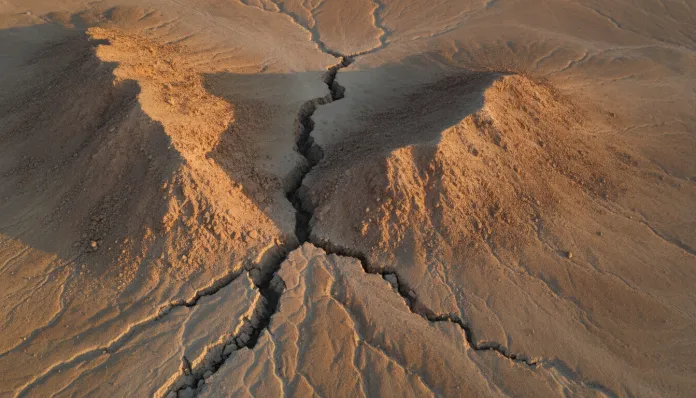
Imagine the ground beneath your feet—something that always seemed the most solid and stable thing in the world—suddenly starts to shake, cracks appear in the walls, and objects fall off shelves. In a matter of seconds, what seemed immutable reveals its true nature: Earth is a living planet, constantly in motion. Earthquakes are one of the most powerful and frightening manifestations of this geological reality, occurring far more frequently than most people realize.
According to the United States Geological Survey (USGS), our planet records hundreds of thousands of earthquakes each year. The vast majority are so weak that they can only be detected by specialized instruments called seismographs. However, some of these events release colossal energies, capable of destroying entire cities, generating tsunamis, and altering Earth’s very landscape. Understanding why this happens is not just a matter of scientific curiosity—it is essential for saving lives and building more prepared societies.
In this article, we clearly and accessibly explain the causes of earthquakes, how they work, where they usually occur, and what science has discovered to try to predict these events. Prepare for a journey into the interior of our planet.
Inside the Earth: The Stage of Earthquakes
To understand earthquakes, one must first know the Earth’s internal structure. Our planet is made up of concentric layers with very different characteristics:
- Earth’s crust: the outermost and thinnest layer, where we live. It can be between 5 and 70 kilometers thick.
- Mantle: the intermediate layer, about 2,900 kilometers thick, made of solid rocks that behave like an extremely viscous fluid over millions of years.
- Outer core: composed mainly of iron and nickel in a liquid state.
- Inner core: the most central part of the planet, solid, with an estimated temperature of around 5,000°C.
The heat generated inside the Earth creates convection currents in the mantle—a very slow but continuous movement, similar to what happens when you heat a pot of porridge. This movement is the engine that sets in motion the entire process leading to earthquakes.
Tectonic Plates: The Giants in Motion
The Earth’s crust is not a continuous and homogeneous shell. It is divided into large fragments called tectonic plates, which “float” on the mantle and move slowly but incessantly—usually a few centimeters per year, roughly at the speed at which fingernails grow.
There are about 15 to 20 major tectonic plates, including the South American Plate, the North American Plate, the African Plate, the Eurasian Plate, the Pacific Plate, and the Nazca Plate, among others. These plates interact in three main ways:
- Convergence: two plates collide. One may dive under the other (a process called subduction) or both compress, forming mountain ranges. The Himalayas, for example, were formed by the collision between the Indian Plate and the Eurasian Plate.
- Divergence: two plates move apart, creating fissures through which magma rises and forms new crust. This happens, for example, at the Mid-Atlantic Ridge, at the bottom of the Atlantic Ocean.
- Transform: two plates slide laterally relative to each other. The famous San Andreas Fault in California is a classic example.
It is at these contact points between plates that the vast majority of earthquakes occur.
How an Earthquake Actually Happens
When two tectonic plates are in contact, they do not slide smoothly. The friction between the rocks causes them to become “locked” for long periods—decades, centuries, or even millennia. During this time, the accumulated pressure grows, like a spring being compressed more and more.
At a certain point, the tension exceeds the resistance of the rocks. They break or shift abruptly, releasing all the accumulated energy at once. This rupture point inside the Earth is called the focus or hypocenter. The point on the Earth’s surface directly above the focus is the epicenter—usually where the effects are most intense.
The released energy propagates in the form of seismic waves, which spread in all directions from the focus, like the waves that form when you throw a stone into water. There are different types of seismic waves:
- P waves (primary): the fastest, compressing and expanding the material they pass through. They are the first to be detected by seismographs.
- S waves (secondary): slower than P waves, they move the material perpendicular to the direction of propagation. They can only propagate in solids.
- Surface waves: the slowest, but generally the most destructive, as they propagate along the Earth’s surface and cause the greatest damage to structures.
How the Strength of an Earthquake is Measured
The intensity of an earthquake is measured in two main ways: magnitude and intensity.
Magnitude measures the energy released at the earthquake’s source and is expressed in numerical scales. The most famous is the Richter Scale, developed by seismologist Charles Richter in 1935, but today seismologists more frequently use the Moment Magnitude Scale (Mw), which is more accurate for large earthquakes. Each whole number increase on the scale represents about 32 times more energy than the previous number.
Intensity, on the other hand, measures the effects of the earthquake at a specific location—how much people felt it, the damage caused to buildings, etc. The Modified Mercalli Intensity Scale is the most commonly used for this, ranging from I (imperceptible) to XII (total destruction).
Some reference parameters for understanding magnitudes:
Magnitude Classification Typical Effects Below 2.0 Micro Imperceptible 2.0 – 3.9 Minor Rarely felt 4.0 – 4.9 Light Objects shake 5.0 – 5.9 Moderate Damage to weak constructions 6.0 – 6.9 Strong Damage in populated areas 7.0 – 7.9 Major Severe damage in large areas 8.0 and above Great Severe destruction Where Earthquakes Occur Most Frequently
Earthquakes are not randomly distributed across the globe. They are mainly concentrated at the edges of tectonic plates. The most seismic region in the world is the so-called Pacific Ring of Fire, a belt that surrounds the Pacific Ocean and passes through Japan, the Philippines, Indonesia, the west coast of the Americas (including Chile and California), and New Zealand. About 80% of the world’s largest earthquakes occur in this region.
Another important seismic belt crosses southern Europe and Asia, passing through the Mediterranean, Turkey, Iran, Pakistan, and northern India.
Brazil, being in the interior of the South American Plate, far from active edges, is considered a region of low to moderate seismic activity. Still, the country records earthquakes periodically, especially in the Central-North region, such as in Ceará, Rio Grande do Norte, and Mato Grosso, but rarely of sufficient magnitude to cause significant damage.
Is It Possible to Predict Earthquakes?
This is one of the most urgent questions in modern geophysics—and the honest answer is: not yet, reliably. Despite decades of intense research, science has not yet developed a method capable of accurately predicting when, where, and with what magnitude an earthquake will occur.
What scientists can do is:
- Map risk zones: identify regions where earthquakes are more likely based on seismic history and the position of geological faults.
- Calculate probabilities: estimate the chance that an earthquake above a certain magnitude will occur in a given region within a period of decades.
- Earthquake alerts: systems like the Japanese and Mexican ones can detect the first seismic waves (less destructive P waves) and send automatic alerts seconds before the more destructive waves reach more distant locations. These few seconds can save lives.
Research with large-scale data analysis, artificial intelligence, and monitoring of precursor signals (such as variations in the electromagnetic field and animal behavior) continue to be studied, but still without conclusive results sufficient for operational use.
How to Prepare for an Earthquake
Even without precise prediction, it is possible to drastically reduce risks with preparation:
- Know the risks of your region by consulting agencies like the Seismological Observatory of UnB (in Brazil) or the USGS (in the USA).
- Reinforce building structures by following seismic standards—countries like Japan are world references in this aspect.
- Assemble an emergency kit with water, non-perishable food, flashlights, medications, and documents.
- Know what to do during the tremor: crouch, protect your head, and hold on to something firm (“drop, cover, and hold on” technique).
- Stay away from windows and objects that may fall during the tremor.
- After the tremor, beware of aftershocks—smaller tremors that often occur in the days and weeks following a major earthquake.
Conclusion
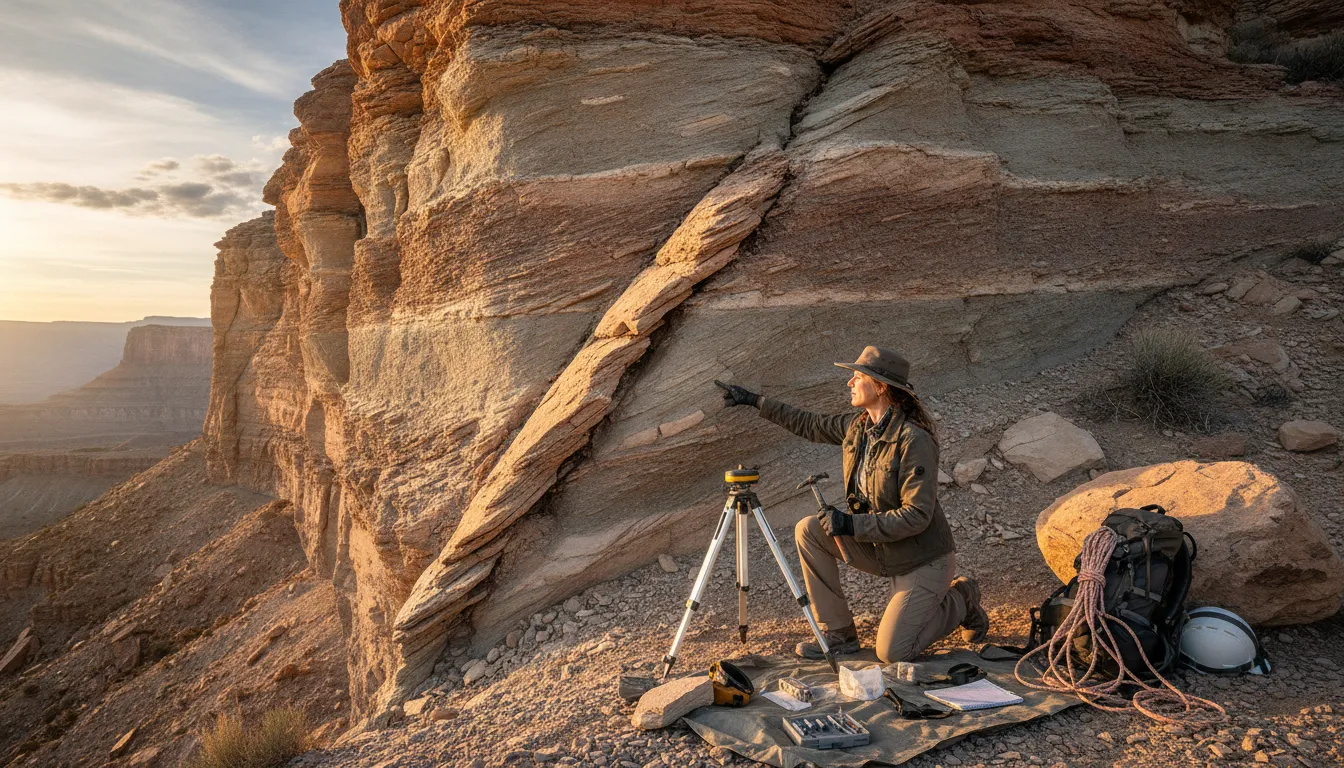
Earthquakes are a direct and inevitable consequence of the internal dynamism of our planet. Tectonic plates are in constant motion, accumulating tensions over time, and when this energy is released, the Earth shakes. There is no way to stop this process—it is part of the geological history of a living planet.
What humanity can do—and has been doing increasingly better—is to understand these phenomena more deeply, build more resilient cities, develop alert systems, and educate the population on how to act. Seismic science has advanced greatly in recent decades, saving countless lives around the world.
Understanding why the Earth shakes is, ultimately, better understanding the planet we inhabit—with all its beauty, complexity, and strength. And this knowledge, far from being frightening, is one of the most powerful tools we have to live more safely on this ground that, after all, was never as solid as it seemed.
Mais Lidas
O Jornal Meia Hora é um portal de notícias que oferece informações atualizadas sobre política, economia, esportes, entretenimento e mais. Nosso compromisso é manter nossos leitores informados com notícias precisas e imparciais.
Redação
Trending
Categorias
© Jornal Meia Hora. Todos os direitos reservados.
- Reinforce building structures by following seismic standards—countries like Japan are world references in this aspect.
- Calculate probabilities: estimate the chance that an earthquake above a certain magnitude will occur in a given region within a period of decades.
- S waves (secondary): slower than P waves, they move the material perpendicular to the direction of propagation. They can only propagate in solids.
- Divergence: two plates move apart, creating fissures through which magma rises and forms new crust. This happens, for example, at the Mid-Atlantic Ridge, at the bottom of the Atlantic Ocean.
- Mantle: the intermediate layer, about 2,900 kilometers thick, made of solid rocks that behave like an extremely viscous fluid over millions of years.


