
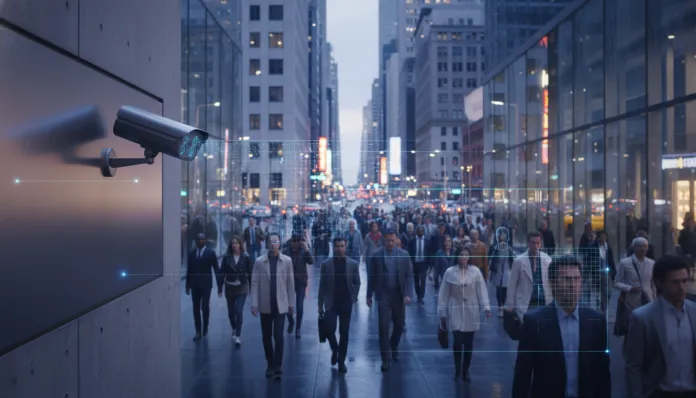
Have you ever thought that by unlocking your phone with your face, you’re using one of the most sophisticated technologies ever developed by humanity? Facial recognition has long ceased to be science fiction and is now present in airports, banks, social networks, and even gym turnstiles. But how exactly does a camera “know” that you are you?
The answer lies in decades of research in artificial intelligence, computer vision, and image processing. What seems like magic in fractions of a second is actually a chain of complex mathematical steps — and understanding this process helps both to better utilize the technology and to make more informed decisions about privacy. By 2026, this discussion has become even more urgent as facial recognition systems have spread to virtually every sector of modern life.
In this article, we will demystify how facial recognition works, explain each step of the process, show where it is applied in the real world, and present the points of attention that every citizen should know.
What is Facial Recognition, Anyway?
Facial recognition is a biometric technology that identifies or verifies a person’s identity from unique facial features. Unlike a password or an ID card, your face is something you always have with you — and that’s exactly why the technology is so convenient and, at the same time, so delicate from a privacy perspective.
There are two main modes of operation:
- Verification (1:1): the system compares your face with a previously registered image to confirm “is this person who they claim to be?” This is what happens when unlocking a phone.
- Identification (1:N): the system compares your face against a database of many faces to find out “who is this person?” It is used in public security systems and airports.
The difference between the two is crucial, especially when considering privacy implications.
The Steps of Facial Recognition: End to End
The complete process can be divided into four major steps. Each involves specific algorithms and demands considerable computing power.
1. Face Detection
Before recognizing someone, the system needs to find the face within an image or video. This seems simple but is a real challenge: the camera may capture a crowd, the face may be partially covered, poorly lit, or at different angles.
Classic algorithms, like Viola-Jones (developed in the early 2000s), laid the foundation for this by mapping contrast patterns between facial regions — such as the eye area being darker than the cheeks. Today, convolutional neural networks (CNNs) do this with much greater precision.
2. Alignment and Normalization
After detecting the face, the system needs to “standardize” it: align the eyes, nose, and mouth in reference positions, adjust size, and correct lighting. This ensures that two faces can be compared fairly, regardless of how they were photographed.
3. Feature Extraction (Embeddings)
Here lies the heart of the technology. The system analyzes the face and extracts a series of unique measurements and patterns, converting everything into a numerical vector called a facial embedding. This vector can have hundreds or even thousands of dimensions and mathematically represents “the essence” of that face.
Modern systems, like FaceNet (developed by Google) and DeepFace (developed by Facebook/Meta), use deep neural networks trained with millions of images to learn which features are most relevant for distinguishing human faces.
4. Comparison and Decision
The captured face’s embedding is compared with stored embeddings in the database using mathematical distance metrics — such as Euclidean distance or cosine similarity. If the distance between two vectors is less than a predefined threshold, the system considers the faces to belong to the same person.
This threshold is critical: too restrictive and the system denies access to legitimate people (false negatives); too permissive and it accepts impostors (false positives).
Where Facial Recognition Is Used Today
By 2026, the technology is integrated into an impressive variety of contexts:
- Airports and Borders: several countries use automatic boarding gates with facial recognition, reducing queues and speeding up passport control.
- Smartphones: Apple’s Face ID, launched in 2017, popularized secure facial unlocking using infrared sensors and 3D face mapping.
- Banking and Financial Services: digital banks use facial recognition to authenticate customers in sensitive transactions.
- Retail: some store chains use the technology to identify frequent customers or, more controversially, suspected shoplifters.
- Healthcare: hospitals are testing systems that speed up patient identification in emergencies.
- Public Security: police forces in several countries use facial recognition systems to identify suspects on surveillance cameras — one of the most debated uses.
How the Technology Has Evolved Over the Years
Facial recognition did not emerge overnight. Woodrow Wilson Bledsoe was one of the pioneers, working in the 1960s on systems that manually classified faces with computer assistance. In the following decades, progress was slow.
The big breakthrough came with deep learning, especially after 2012, when deep neural networks began to outperform humans in image recognition tasks. In 2014, Meta’s DeepFace system achieved 97.35% accuracy on the LFW (Labeled Faces in the Wild) reference database, coming very close to human capability, estimated at around 97.53%.
Since then, system accuracy has consistently increased, and models have become more efficient, able to run even on mobile devices with limited resources. The difference between a 2015 system and a 2025 one is equivalent to the difference between a hand-drawn map and real-time GPS.
The Real Challenges and Limitations of the Technology
As impressive as it is, facial recognition still has important limitations that every user should know:
- Algorithmic Bias: independent studies, including research from MIT Media Lab, have identified that some commercial systems have significantly higher error rates for the faces of black people, especially black women, compared to white men. This is related to the composition of training data.
- Lighting and Angle: adverse lighting conditions or very oblique angles still reduce system accuracy.
- Identical Twins: most systems struggle to distinguish identical twins, as facial features are genetically almost identical.
- Aging and Physical Changes: the face changes over time — surgeries, beards, glasses, or weight gain can affect recognition.
- Presentation Attacks: printed images or sophisticated deepfakes can deceive less robust systems. Modern systems use liveness detection techniques to mitigate this.
Facial Recognition and Privacy: What You Need to Know
This is undoubtedly the most sensitive aspect of the technology. Unlike a password that can be changed, your face is permanent. This raises serious questions about how biometric data is collected, stored, and used.
In Brazil, the General Data Protection Law (LGPD), in effect since 2020, classifies biometric data as sensitive data, requiring explicit consent for collection and use. In the European Union, the General Data Protection Regulation (GDPR) follows a similar logic. By 2026, the regulatory debate on the use of facial recognition in public spaces continues in several countries.
Some practical points of attention:
- Check app permissions that access your camera.
- Read the terms of service before registering your face on unknown platforms.
- Question when necessary: you have the right to know if an environment is using facial recognition and for what purpose.
- If you want to delve deeper into how to protect your personal data more broadly, check out our article on how to protect your personal data on the internet.
Facial Recognition in Everyday Life: Tips for Conscious Use
- Activate facial recognition only on trusted devices, preferably with support for 3D mapping (more secure than simple 2D recognition).
- Keep your registration updated — if you have changed your appearance significantly, re-register your face in apps that use this technology.
- Use two-step authentication in critical services, combining facial recognition with another security factor.
- Disable facial unlocking in risky situations, such as large crowd events, using a PIN temporarily.
- Pay attention to unauthorized access notifications in banking or healthcare apps.
- Prefer services that process facial recognition locally (on the device itself) rather than sending your images to external servers.
Conclusion

Facial recognition is a technology that is both fascinating and challenging. In fractions of a second, sophisticated algorithms transform the unique geometry of your face into numbers, compare these numbers with a database, and make a decision — all almost invisibly to the user.
Understanding this process is not just intellectual curiosity: it is an essential step to navigate the modern world more consciously. Knowing how the technology works allows questioning its uses, demanding transparency from companies and governments, and making more informed decisions about what you agree to share.
Like any powerful technology, facial recognition is not inherently good or bad — its impact depends on how it is regulated, developed, and used. A well-informed citizen is undoubtedly the best antidote to the excesses that any innovation can bring.
- Keep your registration updated — if you have changed your appearance significantly, re-register your face in apps that use this technology.
- Read the terms of service before registering your face on unknown platforms.
- Lighting and Angle: adverse lighting conditions or very oblique angles still reduce system accuracy.
- Smartphones: Apple’s Face ID, launched in 2017, popularized secure facial unlocking using infrared sensors and 3D face mapping.
- Identification (1:N): the system compares your face against a database of many faces to find out “who is this person?” It is used in public security systems and airports.


