
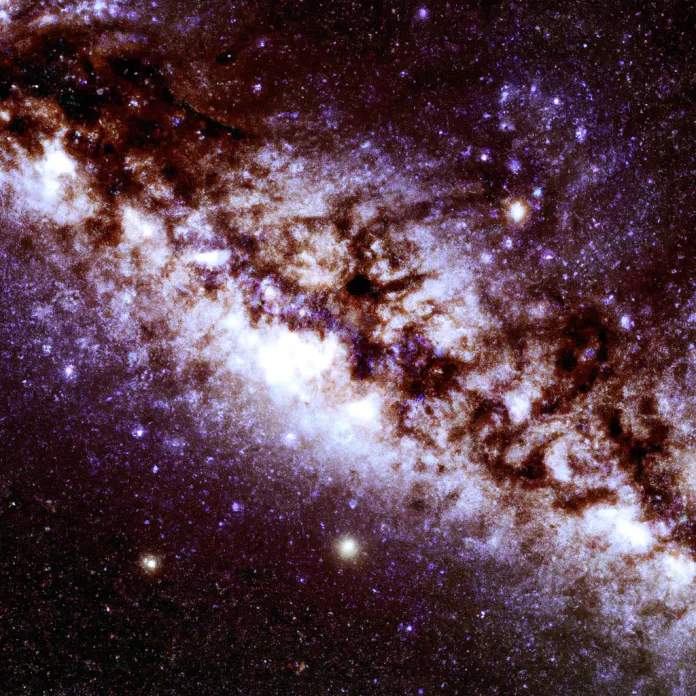
Revolutionary Scientific Discoveries: Unveiling the Mysteries of the Universe
Science has played a fundamental role in our understanding of the universe and the laws governing the world around us. Over the centuries, scientists have made revolutionary discoveries that have changed how we perceive the cosmos. In this article, we will explore some of the most remarkable scientific discoveries that have allowed us to unveil the mysteries of the universe.
The Big Bang: The Birth of the Universe
One of the most impactful discoveries in modern cosmology is the Big Bang theory. According to this theory, the universe originated from a cosmic explosion about 13.8 billion years ago. This explosion gave rise to all the matter, energy, and space-time we know today. Evidence for the Big Bang comes from astronomical observations, such as the expansion of the universe and the cosmic microwave background radiation, which is a remnant of the heat from the Big Bang.
To learn more about the origin of the universe, we recommend reading the article Unlock the Secrets of Medicine for a Healthy Life.
Einstein’s Theory of Relativity: The Universe in Motion
Albert Einstein revolutionized physics in the early 20th century with his theory of relativity. According to this theory, space and time are interconnected in a structure called space-time, and gravity is a consequence of the curvature of this space-time caused by the presence of mass and energy. The theory of relativity predicts phenomena such as time dilation and the bending of light around massive objects like stars and black holes.
To better understand the theory of relativity, read the article Descubra os segredos da medicina para uma vida saudável.
Quantum Mechanics: The Subatomic World
Quantum mechanics is the theory that describes the behavior of matter and energy on very small scales, such as atoms and subatomic particles. This theory challenges our intuition by introducing concepts like superposition, where a particle can be in multiple states at the same time, and entanglement, where separated particles are instantly connected regardless of the distance between them.
To explore more about quantum mechanics, we recommend reading the article Unlock the Power of Public Speaking: Become a Master Communicator.
The Accelerated Expansion of the Universe: Dark Energy and Dark Matter
In recent decades, astronomers have made a surprising discovery: the universe is expanding at an accelerated rate. This expansion is driven by two mysterious forces: dark energy and dark matter. Dark energy is a hypothetical form of energy that permeates all space and is causing the acceleration of the universe’s expansion, while dark matter is an invisible form of matter that makes up most of the universe’s mass.
To learn more about the accelerated expansion of the universe, read the article Desvende o poder das palestras: como se tornar um mestre da comunicação.
The Discovery of Exoplanets: In Search of Other Worlds
In recent years, astronomers have made incredible discoveries of planets outside our solar system, known as exoplanets. These distant worlds vary in size, composition, and orbit, and some may harbor conditions favorable to life. The search for exoplanets has led scientists to question whether we are alone in the universe and to explore the possibilities of life in other star systems.
To learn more about the discovery of exoplanets, we recommend reading the article Top 10 Must-See Live Shows Right Now.
Conclusion
As science advances, we continue to unveil the mysteries of the universe and expand our knowledge of the cosmos. Discoveries like the Big Bang, the theory of relativity, quantum mechanics, dark energy, dark matter, and exoplanets provide us with valuable insights into the nature of the universe and our place in it. Through scientific research and exploration of the unknown, we can continue to reveal the secrets of the universe and marvel at the vastness and complexity of the cosmos.

