
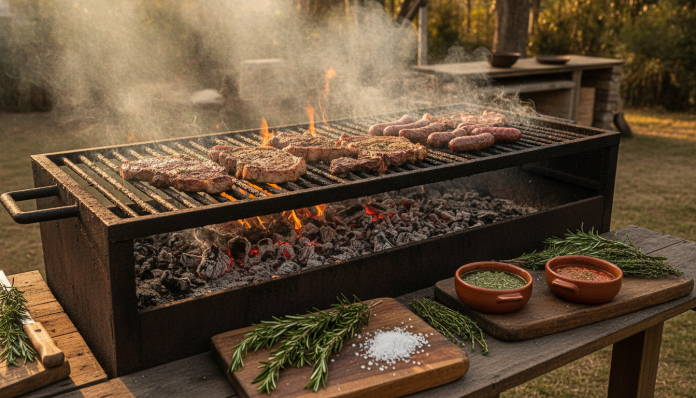
Why Brazilian barbecue is a ritual apart
Is there anything more Brazilian than firing up the grill on the weekend, gathering family and friends, and spending hours around the fire? Barbecue in Brazil is much more than a way to cook meat — it’s a social event, a moment of celebration, and for many, almost a religion. It’s no wonder the country ranks among the world’s largest beef consumers, and barbecue culture is rooted in practically every region, from the gaucho South to the Northeast with its famous “barranco de boi.”
But mastering the art of barbecue isn’t as simple as it seems. Between the fire that won’t start, meat that turns out dry or raw inside, salt applied at the wrong time, and hungry guests staring at you with expectation, the challenge is real. The good news is that the secrets behind a perfect barbecue are accessible to anyone willing to learn — and they don’t require expensive equipment or exotic ingredients.
In this guide, we’ll walk through the entire process from start to finish: from choosing meats to the ideal doneness for each cut, covering charcoal types, fire management, side dishes, and the most common mistakes that sabotage even the best-equipped grills. Get ready to elevate your next barbecue.
Choosing the meat: the foundation of everything
Barbecue begins long before lighting the fire — it starts at the butcher shop or supermarket. Choosing the right cuts makes an enormous difference in the final result.
Classic cuts and their characteristics
- Picanha: the queen of Brazilian barbecue. A cut from the rear of the beef, it has a fat cap that, when properly roasted, melts and gives the meat flavor and juiciness. Should be purchased with the fat cap intact, weighing between 1 kg and 1.2 kg — larger pieces may be from another part of the animal.
- Fraldinha: a cut from the beef’s abdomen, with long fibers and intense flavor. Ideal for those who like meat with more texture and pronounced taste.
- Ribs: require patience, but reward handsomely. Can be prepared slowly on the grill, wrapped in foil, for 4 to 6 hours, resulting in meat that falls off the bone.
- Maminha: tender, juicy, and mild-flavored. A great option for those who prefer less intense meats.
- Artisanal sausage: a mandatory presence at many barbecues. Works well at the beginning of the event, while the main meats are still cooking.
- Chicken (thighs and drumsticks): more affordable and very tasty when well marinated. The natural fat in the skin helps maintain moisture during preparation.
Practical tip: when buying, observe the meat’s color (should be bright red, without grayish spots) and fat texture (white or slightly yellowish, never dark or sticky).
Charcoal and fire: the foundation of success
One of the biggest villains of unsuccessful barbecue is poorly controlled fire. Many people underestimate this step and end up with meat that’s burned on the outside and raw inside.
Types of charcoal
There are basically two types available in the Brazilian market:
- Common charcoal: the most affordable, produces good coals, but may contain irregular pieces that make temperature control difficult.
- Charcoal briquettes: denser, burn more uniformly and last longer. Slightly more expensive, but ideal for long barbecues.
How to light the fire correctly
- Arrange the charcoal in a pyramid shape in the center of the grill.
- Use liquid starter or starter paste applied in moderation — excess alters the meat’s flavor.
- Wait for the fire to spread naturally across the charcoal before using the fan.
- Never place meat on the grill with an open flame. Wait for the coals to turn reddish and be covered with a layer of white ash — this is the signal that the heat is stable and ideal for roasting.
- The average time to reach ideal coals is 30 to 45 minutes.
Grill height: the distance between the coals and the meat determines heat intensity. For thick cuts (like ribs and whole picanha), keep the grill higher — about 40 cm from the coals. For thin cuts and sausages, 15 to 20 cm is sufficient.
Salt: the secret many people get wrong
Coarse salt is tradition in Brazilian barbecue, but how and when you apply it makes all the difference.
- Apply coarse salt just before putting the meat on the grill, or even during the process. Salting well in advance can dehydrate the meat and leave it dry.
- For picanha, distribute coarse salt generously over the fat cap and a bit on the sides. There’s no need to salt the lean part before grilling.
- For chicken, salt can be applied hours ahead (along with the marinade) to help the seasoning penetrate.
- When serving, remove excess coarse salt by gently tapping the meat with your hand or with the knife itself.
Beyond coarse salt, other seasonings can come into play: crushed garlic, black pepper, herbs like rosemary and thyme work well in marinades for chicken and more rustic beef cuts.
Getting the meat’s doneness right: how to nail it without guessing
Knowing the right doneness for meat is a skill that develops with practice, but there are objective references that help a lot.
The finger pressure technique
Press lightly the center of the meat with your finger:
- Rare (very undercooked): meat yields easily, soft feeling — similar to a relaxed palm.
- Medium rare: moderate resistance — similar to the base of your thumb with fingers slightly closed.
- Well done: firm meat — similar to the base of your thumb with a closed fist.
Meat thermometer: underrated ally
Those who want precision can invest in a meat thermometer, available at kitchenware stores for affordable prices. Reference internal temperatures for beef are:
| Doneness | Internal temperature |
|---|---|
| Rare | 52°C to 55°C |
| Medium rare | 57°C to 60°C |
| Medium | 63°C to 68°C |
| Well done | above 70°C |
Important: after removing the meat from the grill, let it rest for 3 to 5 minutes before cutting. This time allows the juices to redistribute through the fibers, resulting in much juicier meat.
Side dishes that make a difference
A good barbecue doesn’t live by meat alone. The right side dishes complete the experience and ease the intensity of flavors.
Classics that never disappoint
- Farofa: can be simple (butter, flour, and salt) or enhanced with bacon, eggs, plantain, or olives.
- Vinaigrette: tomato, onion, bell pepper, parsley, oil, and vinegar. Fresh and light, it cuts through the richness of the meat.
- Garlic bread: made on the grill itself, in foil or directly on the grate, is guaranteed at any gathering.
- Green salad: leaves, cherry tomatoes, hearts of palm — help balance the menu and are welcome for those preferring lighter options.
- White rice or carreteiro rice: carreteiro, made with leftover dried beef or charque, is a gaucho dish that has won over all of Brazil.
For those planning a barbecue as part of a special weekend, whether at home or on a property, it’s worth checking out how to make the most of a weekend getaway — planning well makes all the difference in the collective experience.
Common mistakes and how to avoid them
Even experienced grillers make slip-ups. Knowing the most frequent mistakes is halfway to avoiding them.
- Piercing the meat with a fork: releases the juices and dries out the meat. Always use tongs or pincers.
- Flipping the meat too frequently: each side should sear well before being flipped. The general rule is to flip the meat only once or twice.
- Putting cold meat directly on the grill: remove the meat from the fridge 30 to 40 minutes before grilling. Very cold meat makes uniform cooking difficult.
- Not cleaning the grill: residue from previous barbecues burns and transfers bitter flavor to the meat. Heat the grill and clean it with a proper brush before each use.
- Serving prematurely: haste is the enemy of barbecue. Respecting the time for each cut and the post-grill rest is fundamental.
Conclusion: barbecue is a process, not a rush
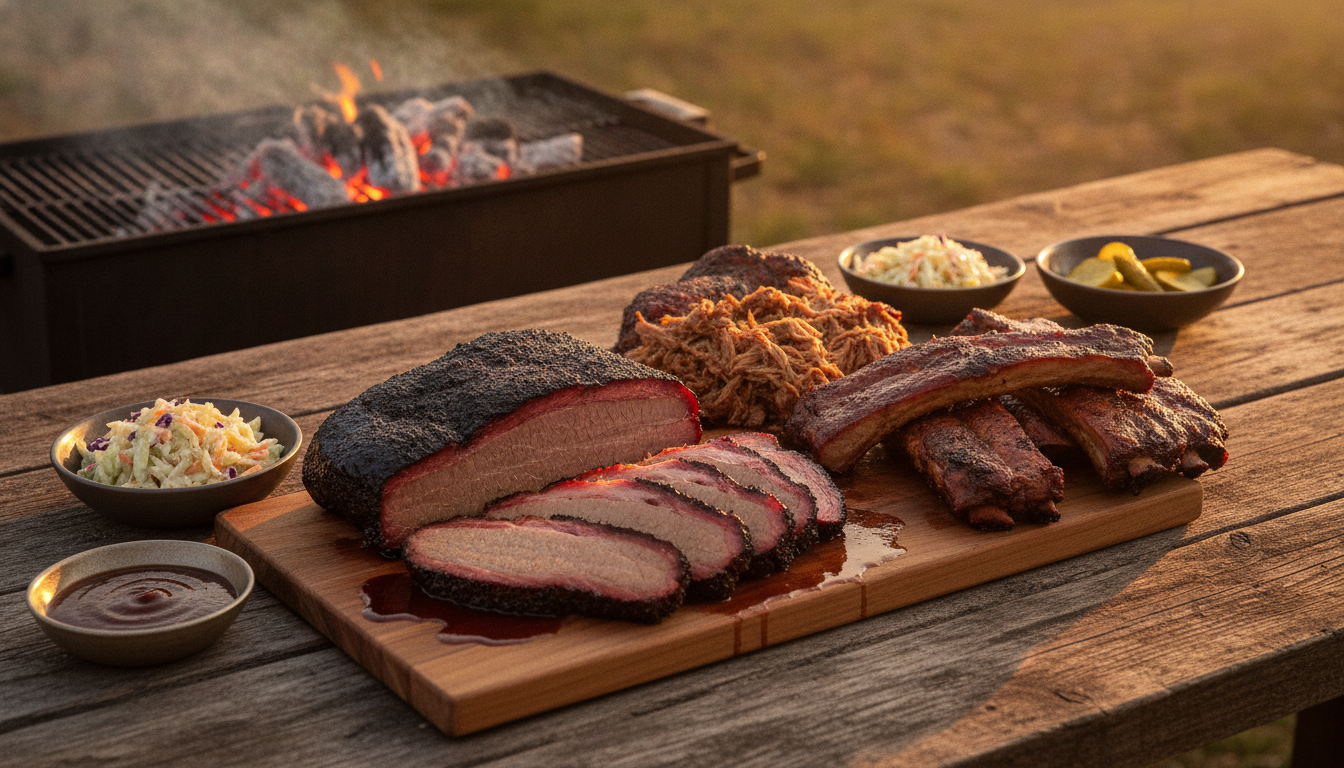
Mastering barbecue is a journey that combines technique, patience, and above all, practice. Each grill has its particularities, each cut has its time, and each bed of coals behaves slightly differently. The greatest secret, in the end, lies in paying attention: to the fire, to the meat, to the smell, to the texture.
The points we’ve covered here — choosing the cuts, controlling the coals, applying salt correctly, respecting the meat’s doneness, and resting before cutting — form the foundation of any well-executed barbecue. With these fundamentals well absorbed, confidence grows naturally, and each barbecue becomes better than the last.
And remember: the perfect barbecue isn’t just one with meat cooked to the ideal doneness. It’s the one that brings people together, sparks conversations, creates memories, and makes everyone want to do it again. No technique can substitute that — but good meat certainly helps.