
How to Make the Most of a Weekend Getaway
Two days. Forty-eight hours. It seems like a short time, but it’s enough to recharge your energy, discover a new place, and create memories that last far longer than the trip itself. The challenge is precisely this: making the most of every hour without turning the getaway into a stressful race that leaves you more tired than when you left home.
The good news is that traveling well in short periods is a skill that can be learned and perfected. With some strategic planning and the willingness to let go of the perfectionism of seeing “everything,” any weekend can become a genuinely revitalizing experience. It doesn’t matter if the destination is a historic city, a nearby beach, or a peaceful mountain town: the techniques are essentially the same.
In this article, we’ve gathered practical guidance for those who want to get the most out of a short trip — without stress, without excessive improvisation, and without that frustrating feeling that “it could have been better.”
Choose the Right Destination for Your Available Time
The first classic mistake of those planning a weekend getaway is choosing a destination that’s too far away. If you’re going to spend eight hours driving or on flight connections, you’ll arrive at your destination already with half your energy consumed — and you’ll still need to repeat the journey on the way back.
The Reasonable Travel Time Rule
A practical reference: for two-day trips, ideally the total travel time (there and back) should not exceed one-third of your available time. In concrete terms, this means prioritizing destinations that are no more than three or four hours away from your starting point. This criterion changes depending on the mode of transport — a one-hour domestic flight can be more efficient than four hours of driving in heavy traffic, for example.
Brazil, fortunately, is a country with an absurd diversity of destinations a short distance from almost any major city. If you want inspiration for lesser-known and equally enchanting places, check out this guide to hidden gems worth visiting in Brazil — full of options that escape the obvious.
Plan Ahead, But Leave Room for Spontaneity
Planning and spontaneity are not enemies — they are partners. The idea is not to create a rigid itinerary that looks like a corporate agenda, but rather to ensure that the essential points are covered so you can relax the rest of the time.
What to Book in Advance
- Accommodation: always. Especially in high-demand tourist destinations, where places run out quickly on weekends.
- Popular restaurants or those with long queues: if there’s a specific place you don’t want to miss, make a reservation beforehand.
- Activities with fixed schedules: guided hikes, boat tours, visits to attractions with visitor limits.
- Round-trip transportation: flights, buses, or car rentals should be arranged in advance to ensure better prices and availability.
What to Leave Open
Reserve at least 30% of your itinerary for improvisation — that unnamed coffee shop on the corner, a conversation with a local resident who recommends a deserted beach, or simply the pleasure of having nothing mandatory to do for a few hours.
Create an Intelligent Itinerary: Less Is More
The compulsive tourist syndrome — the one that tries to visit 12 attractions in two days — is real and damages the quality of the experience. Studies in leisure psychology indicate, in general, that satisfaction with a trip is more related to the depth of experiences than to the quantity of places visited.
How to Distribute Your Itinerary Over Two Days
- Friday evening (or Saturday early morning): arrival, check-in, and getting acclimated. Avoid scheduling demanding activities right upon arrival — use this time to explore the neighborhood on foot, dine at a relaxed pace, and get a good night’s sleep.
- Saturday: reserve for the most distant activities or those requiring more physical energy, such as hikes, beaches, or intensive cultural tours. Take advantage of the morning, which is usually the best time in terms of weather, crowds, and light for photos.
- Sunday morning: more relaxed activities, local markets, a typical breakfast from the region. Avoid leaving your departure for too late — return traffic on Sunday afternoons is one of the factors that most compromises the weekend travel experience.
The Right Luggage Makes All the Difference
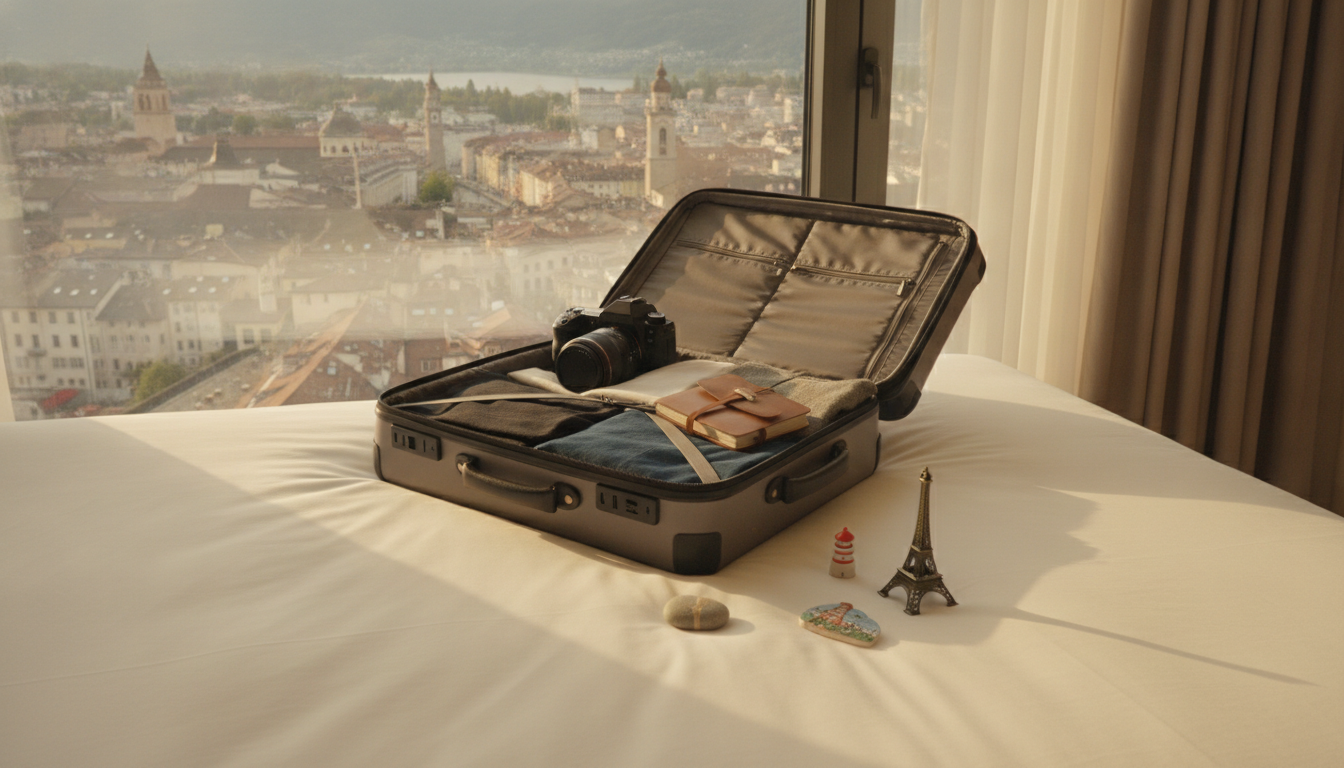
For short trips, the ideal baggage is one that fits in the airplane’s overhead compartment or in the car’s back seat without a mess. Oversized luggage generates extra costs, wasted time, and that feeling of carrying your house on your back.
Practical Packing List for a Weekend Trip
- Two changes of clothes per day (calculate temperature and planned activities)
- One dressier outfit, in case there’s a special dinner or event
- Travel-sized toiletries (small bottles)
- Phone charger and portable battery pack (power bank)
- ID and physical card (don’t rely solely on your phone for payments)
- Medications for continuous use and a basic kit: pain reliever, antihistamine, bandages
- Sunscreen — regardless of destination or season
Golden tip: set aside the clothes you’ll wear on your last day and place them on top or in a separate compartment. Nothing worse than rummaging through your luggage on Sunday morning when it’s time to leave.
Eat Like a Local: Gastronomy as an Experience
One of the richest parts of any trip — and often underestimated in short itineraries — is local cuisine. Eating where residents eat is not only more authentic: it’s usually significantly cheaper and tastier than restaurants aimed exclusively at tourists.
How to Find Good Places to Eat
- Ask the hotel or inn staff where they themselves have lunch
- Observe queues and activity during meal times — a restaurant full of locals is a good sign
- Rating apps like Google Maps are useful, but filter the most recent reviews and read comments, not just ratings
- Municipal markets and street fairs are excellent options for breakfast and snacks — and they function as a cultural attraction in themselves
Avoid planning all your meals in advance. Part of the pleasure of traveling is discovery, and sometimes the best restaurant of the trip is one you find by chance, with the smell of food coming out the door.
Take Care of Your Body During the Trip
Short trips have a specific trap: the temptation to compensate for little time by sleeping less, eating poorly, or overdoing physical activities. The result can be a return home more tiring than the work week.
Note: the following guidelines are general wellness information. Individual health conditions should always be evaluated by a healthcare professional.
- Hydration: the travel environment — especially airplanes and strong sun — dehydrates faster than your routine. Drink water regularly, even without feeling intense thirst.
- Sleep: try to get at least six to seven hours per night. Getting little sleep compromises your mood, physical disposition, and even your ability to enjoy the experience.
- Moderate physical activity: an exploratory walk is great for your body and for getting to know the destination. If you have a running habit, for example, maintaining it during your trip can be invigorating — and it can be done anywhere.
- Don’t overdo alcohol: a glass of local wine or a craft beer from the region is part of the experience; the hangover the next day is not.
Document Without Getting Lost in Your Screen
Taking photos of experiences is natural and pleasurable, but there’s a delicate balance between recording and truly living. Spending the weekend looking through your phone’s lens is one of the most efficient ways to not be present in your own trip.
Some Strategies That Work
- Set specific moments for photos — the arrival at a new place, the sunset, the special meal — and then put your phone away
- Try keeping a small travel diary, even if it’s just three sentences a day. Text evokes memories differently than images
- If you’re using social media, post after your trip — liking, responding to comments, and checking notifications in real-time takes focus away from the present
Conclusion: The Art of Traveling Well in Short Time
Making the most of a weekend getaway is not a matter of having extra money or finding the perfect destination. It’s a combination of conscious choices: a destination compatible with your available time, enough planning to ensure the essentials, and enough openness to let the trip surprise you.
Perhaps the most underestimated secret of all is simple: presence. Being truly where you are, without anxiety about what you’ll do next or homesickness for home comforts. Two days well lived are worth much more than a week of poorly spent vacation.
And if the desire to explore the world grows after a good weekend trip, remember that the first step is always the most important — whether on the road or, who knows, starting to run from scratch to have more energy for your next adventures.


