
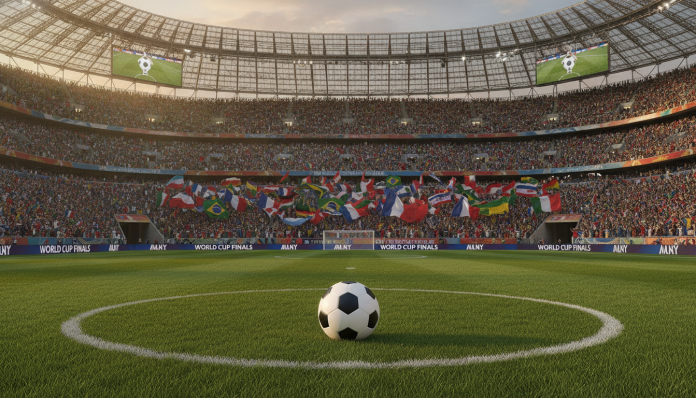
World Cup: Fascinating Facts You May Not Know
The FIFA World Cup is the most-watched sporting event on the planet. Every four years, billions of people around the globe pause everything to follow the matches, cheer for their countries, and experience moments that last forever in memory. But behind the celebrated goals, thrilling finals, and icons who enter history, there exists a universe of curiosities, surprising numbers, and little-known stories that make the competition even more fascinating.
You probably know who won the last World Cup or how many trophies Brazil has in its collection. But did you know there were editions played without any draws, or that a player once won the tournament with two different countries? Or that the official ball used in the first World Cups was radically different from what we see today? Details like these reveal how many layers of history the world’s greatest football tournament has waiting to be discovered.
In this article, we dive deep into the behind-the-scenes of the World Cup to bring you fascinating facts, impressive numbers, and stories you probably never heard—or heard and forgot. After all, knowing the tournament’s history is a way to appreciate every match even more.
The Beginning: A Competition That Almost Never Happened
The first World Cup was held in 1930 in Uruguay. The choice of host country was historic: the Uruguayans were Olympic football champions and were about to celebrate the centennial of their national independence, so they agreed to bear much of the event’s costs to host the tournament. FIFA, founded in 1904, organized everything with just 13 participating teams—a modest number compared to the 32 teams that competed in more recent editions.
What few people know is that several European countries refused the invitation. The ship journey to South America took weeks, and many European clubs didn’t want to release their players for so long. France, Belgium, Yugoslavia, and Romania were the only Europeans to cross the Atlantic. Uruguay won the final against Argentina 4-2, and world football would never be the same.
The Trophy That Was Stolen (and Recovered by a Dog)
The Jules Rimet Trophy—the original World Cup trophy, named after the FIFA president who conceived the tournament—has a story worthy of a movie script. During World War II, to prevent the object from being confiscated by the Nazi regime, Italian official Ottorino Barassi hid the trophy in a shoebox under his bed in his Rome apartment. The strategy worked, and the trophy survived the war intact.
But the adventure didn’t stop there. In 1966, when England hosted the World Cup, the trophy was stolen during an exhibition in London, months before the tournament. The case became a national scandal. Just a week later, a dog named Pickles sniffed out the wrapped trophy abandoned in a garden in Norwood, south London. The animal became a national celebrity, and the trophy returned in time for the competition—which England, by the way, won for the only time in its history.
The Jules Rimet Trophy was permanently given to Brazil in 1970 after winning the tri-championship. But the tragic fate continued: the trophy was stolen again in 1983, this time in Rio de Janeiro, and has never been found. It is believed to have been melted down.
Records That Impress
The World Cup has accumulated over its editions a series of extraordinary marks. Check out some of the most impressive:
- Biggest score in history: Hungary thrashed El Salvador 10-1 in 1982 at the Spain World Cup.
- All-time top scorer: German Miroslav Klose is the greatest goalscorer in World Cup history, with 16 goals over four editions (1998, 2002, 2006, and 2010).
- Youngest player to score: Brazilian Pelé made history by scoring in the 1958 World Cup final in Sweden at just 17 years old.
- Only player to win the Cup with two different countries: Ivorian Robert Pires… no, that’s an urban myth. In fact, this has never happened for a simple reason: FIFA rules prohibit a player from representing two nations in the same competition throughout their career.
- Country with the most titles: Brazil leads with 5 championships (1958, 1962, 1970, 1994, and 2002).
The Ball That Changed Everything
Few elements of football have changed as much as the ball used in World Cups. In the tournament’s early editions, balls were made of natural leather with internal air chambers and became heavy and irregular when soaked by rain. The stitching was on the outside and could hurt players attempting powerful headers.
From the 1970s onward, balls began incorporating synthetic materials, becoming lighter, waterproof, and more predictable. Adidas has been the official ball supplier since 1970, and each World Cup has its own ball with exclusive name and design. Some, like the Jabulani (used at the 2010 South Africa World Cup), generated controversy among goalkeepers and players due to unpredictable trajectory.
The technological evolution of balls reflects the transformations of football itself: faster, more technical, and increasingly dependent on science and engineering.
Countries That Surprised (and Disappointed) the World
The World Cup is also a stage for memorable upsets and stories of overcoming that defy expectations.
The Great Surprises
- North Korea (1966): considered one of the biggest upsets in history, the North Korean team eliminated Italy in the group stage and reached the quarterfinals—a result still studied in football’s back rooms today.
- Cameroon (1990): the “Indomitable Lions” reached the quarterfinals at the Italy World Cup, eliminating Argentina in their opening match and enchanting the world with determined and creative football.
- Senegal (2002): debuting in a World Cup, Senegal eliminated France—then defending champions—and also reached the quarterfinals.
Favorites Who Disappointed
- Brazil (2014): hosting the World Cup and being thrashed 7-1 by Germany in the semifinal at the historic “Mineiraço” is possibly the greatest collective trauma in Brazilian football. The match, played in Belo Horizonte, is still remembered with pain by generations of fans.
Curiosities About Hosts and Behind the Scenes
Organizing a World Cup is a monumental logistical operation. Some data helps understand what this means:
- The 2014 Brazil World Cup cost, according to estimates, more than 11 billion dollars in infrastructure, stadiums, and security.
- The Maracanã Stadium in Rio de Janeiro was able to hold more than 200,000 people in its original 1950s configuration. Today, with modern safety regulations, capacity is about 78,000 spectators.
- In 1950, the World Cup was held in Brazil with a different format: there was no official final between two teams. The title was decided in a final group phase, and Uruguay became champions by defeating Brazil 2-1 at the Maracanã—an episode known as the “Maracanazzo”.
- The 2026 World Cup will be the first in history to bring together 48 nations, expanding the tournament that had 32 participants since 1998. The event will be hosted by three countries: United States, Canada, and Mexico.
Football Beyond the Field
The World Cup has an impact that goes beyond the playing field. Economists study the tournament’s effects on country productivity, commerce movement, and even the collective mood of populations. Research shows that days of local national team matches tend to reduce absenteeism in some sectors while dramatically increasing consumption in bars, restaurants, and retail commerce.
From a cultural perspective, the World Cup is also a phenomenon of national identity. In many countries, especially Brazil, the tournament mobilizes entire communities, unites generations, and creates affective memories that span decades. If you’ve ever heard children repeat the names of Pelé, Ronaldo, or Zidane without ever watching one of their matches live, you know exactly what we’re talking about.
Talking about the World Cup is talking about history, culture, and passion. Just as exploring surprising destinations in Brazil reveals facets of the country beyond the obvious, diving into the curiosities of the world’s greatest tournament is discovering that football has so much more to tell than the final score.
Conclusion: The Tournament That Never Stops Surprising
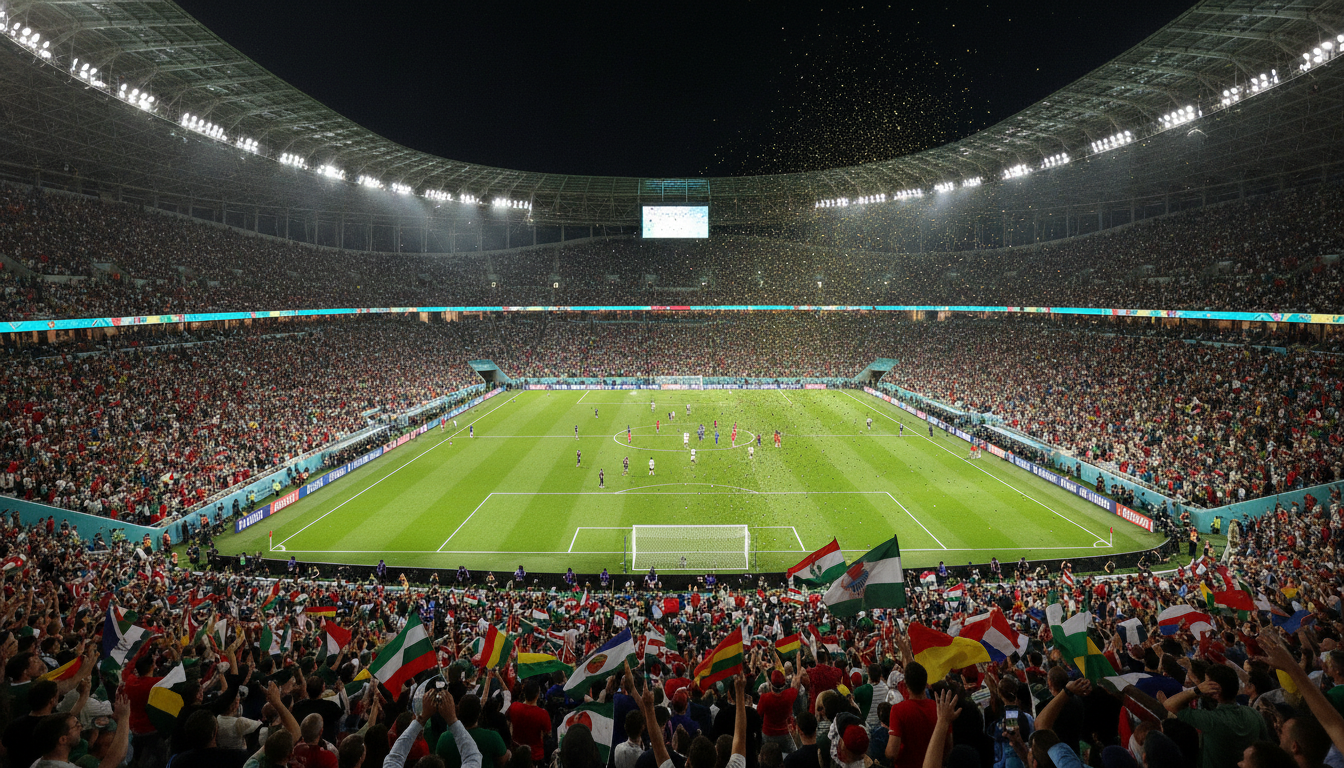
The World Cup has nearly a century of history and, with each new edition, continues to reinvent itself. From a competition with 13 nations in 1930 to a mega-event with 48 participants in 2026, the tournament has grown in scale, technology, and complexity—but has kept its essence intact: football as a universal language, capable of moving, uniting, and dividing billions of people at the same time.
The curious facts that run through the World Cup’s history are not just anecdotes to share in conversation circles. They reveal how much sport is also a mirror of society: its contradictions, its glories, its stumbles, and its triumphs. Knowing this history is, ultimately, a way to better understand the world—and to cheer with much more emotion the next time the ball rolls.


