
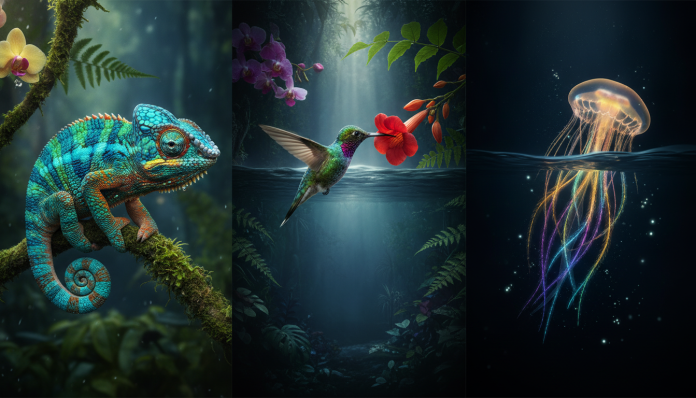
If you think humans are the most impressive beings on the planet, prepare to reconsider. Nature has spent billions of years perfecting ingenious solutions to survival challenges, resulting in a gallery of creatures with abilities that seem straight out of science fiction movies. Animals that see colors our eyes can’t process, navigate continents without GPS, survive extreme temperatures, or simply come back to life after being frozen.
The animal kingdom is a living catalog of real superpowers. It’s not metaphor: it’s biology, chemistry, and physics working together in ways that still challenge scientists’ understanding. Many of these abilities inspire modern technologies — from adhesive materials based on gecko feet to sonar systems inspired by bats. Nature, after all, has already solved problems that human engineering still struggles to master.
In this article, we’ll dive into some of the most extraordinary capabilities in the animal world, explaining how they work and why they’re so fascinating. You won’t need formal biology training to be amazed — just curiosity.
The Tardigrade: The Nearly Immortal Animal
If there’s a champion of resilience on the planet, it’s less than 1 millimeter in size. The tardigrade — also called a “water bear” for its chubby appearance when viewed under a microscope — can survive conditions that would kill practically any other living being.
This tiny invertebrate can tolerate:
- Temperatures from -272°C (close to absolute zero) to +150°C
- Pressures up to 6,000 atmospheres (more than at the deepest ocean point)
- Ionizing radiation in doses lethal to humans
- Exposure to the vacuum of space
- Decades without water
The secret lies in a process called cryptobiosis: when conditions become extreme, the tardigrade retracts its legs, loses almost all body water, and enters an almost complete metabolic suspension. In this form, called a “tun,” it can remain inactive for years — and return to normal as soon as the environment improves.
Experiments with tardigrades have confirmed they can survive in outer space, exposed to solar radiation and vacuum, making them serious candidates for the title of most resilient beings on the known planet.
The Mantis Shrimp: Vision Beyond Understanding
Humans see the world with three types of photoreceptors (for red, green, and blue). The mantis shrimp, also known as a stomatopod, has up to 16 types of photoreceptors. At first glance, this sounds like absurdly superior vision to ours, but the reality is even more interesting — and different than it seems.
Research published in specialized scientific journals revealed that mantis shrimp don’t process as many colors as the receptors might suggest. Their vision works differently: instead of comparing signals between receptors (like we do), they identify colors more directly and quickly, like an optical barcode reader. This allows for extremely fast reactions to specific visual patterns.
Additionally, the mantis shrimp sees ultraviolet and infrared light and can perceive polarized light — a type of visual information our eyes simply ignore. This ability is fundamental to their communication and locating prey in aquatic environments with complex light variations.
Its physical strike is also legendary: the mantis shrimp’s so-called “thumb” can move at about 23 meters per second, generating a force capable of breaking snail shells and even aquarium glass. The impact creates cavitation — a vacuum bubble that explodes releasing additional energy. It’s literally a supersonic underwater punch.
Octopuses: Masters of Disguise and Distributed Intelligence
The octopus is one of the ocean’s most cognitively surprising creatures — and also one of the most alien in terms of biology. Its nervous system is radically different from ours: of its approximately 500 million neurons, two-thirds are distributed in the tentacles, not in the central brain. Each arm has the capacity to process information and act semi-autonomously.
This means an octopus’s tentacles can solve simple tasks — like exploring a den or manipulating an object — without needing direct instructions from the brain. It’s a form of distributed intelligence that has no equivalent among vertebrates.
The octopus’s camouflage ability is equally impressive. In fractions of a second, it can alter:
- The color of the skin through cells called chromatophores
- The texture surface by controlling muscular papillae that create relief
- The pattern visually, simulating stones, corals, sand, or even other animals
The most intriguing detail? Octopuses are colorblind — most species have only one type of photoreceptor. The most accepted theory is that they use pupil dilation and polarized light to differentiate colors indirectly. How they manage to camouflage so perfectly without seeing colors is a question scientists are still actively investigating.
Bats and Dolphins: Biological Sonar with Surgical Precision
Long before humans invented sonar and radar, bats were already using echolocation with a precision that modern engineers admire. The animal emits ultrasonic pulses — sounds with frequencies above what human ears can capture — and interprets the returning echo to map the environment in real time.
Some bats can detect objects as thin as a human hair in complete darkness, in full flight. More than that, they can distinguish surface texture and identify insect types by the reflection pattern of moving wings.
Dolphins use a similar system but adapted to the aquatic environment. They produce rapid sequences of clicks and process the echoes with a specialized region of the head called the melon — a lipid-filled structure that functions as an acoustic lens. Studies show dolphins can identify submerged objects at tens of meters away, distinguishing shape, size, and even material density.
These capabilities directly inspired technologies like naval sonar, navigation systems for the visually impaired, and obstacle detection algorithms used in autonomous vehicles.
Migratory Birds: Biological GPS and Quantum Vision
Every spring and fall, billions of birds cross continents and oceans without getting lost. The obvious question is: how do they know the way? The answer involves at least three different mechanisms working at the same time.
The first is the perception of Earth’s magnetic field. Birds like the European goldfinch have proteins called cryptochromes in their eyes that are sensitive to the magnetic field. The proposed mechanism involves a process of quantum physics — the quantum entanglement of electrons — that allows the bird to “feel” the magnetic field direction as an overlay in vision. It’s, as far as is known, one of the only examples of quantum phenomena functioning in biological systems at room temperature.
The second mechanism is stars and the sun: many species learn orientation by the sky during development. The third is memorized geographical landmarks along routes repeated by generations.
The Arctic tern (Sterna paradisaea) performs the largest migration known of any animal: it travels from the Arctic to Antarctica and back every year, covering up to 90,000 km in a single migratory cycle — and does this for about 30 years of life.
Tarantulas and Geckos: Adhesion Without Glue
The gecko is famous for climbing smooth glass walls without any adhesive substance. The secret lies in setae — millions of nanofibers on the soles of the paws that create van der Waals forces (extremely short-range electromagnetic interactions) with the surface. The sum of these microscopic forces is enough to support the animal’s weight.
Each gecko paw has about 500,000 microscopic hairs, each divided into hundreds of even smaller tips. The system is dry, cleans itself, and works on almost any surface. Researchers have already developed adhesive materials based on this principle for use in robotics and medicine.
Quick Curiosities: What Else the Animal World Hides
The list of extraordinary animal abilities would be endless. Here are a few more highlights:
- Elephants detect infrasound — sounds with frequency below the human limit — and use this to communicate with other groups tens of kilometers away
- Sharks have organs called ampullae of Lorenzini that detect electrical fields generated by the musculature of other creatures, even hidden under sand
- Blue-ringed octopuses (Hapalochlaena spp.) carry enough tetrodotoxin to kill humans, but produce this poison with help from symbiotic bacteria — not on their own
- Reindeer modify eye color seasonally: blue in winter (to capture more light) and golden in summer — the only known seasonal change in eye color in mammals
- Leafcutter ants carry loads up to 50 times their own weight, with proportional cervical musculature that structural engineers study for material design
Conclusion: Nature as an Innovation Laboratory
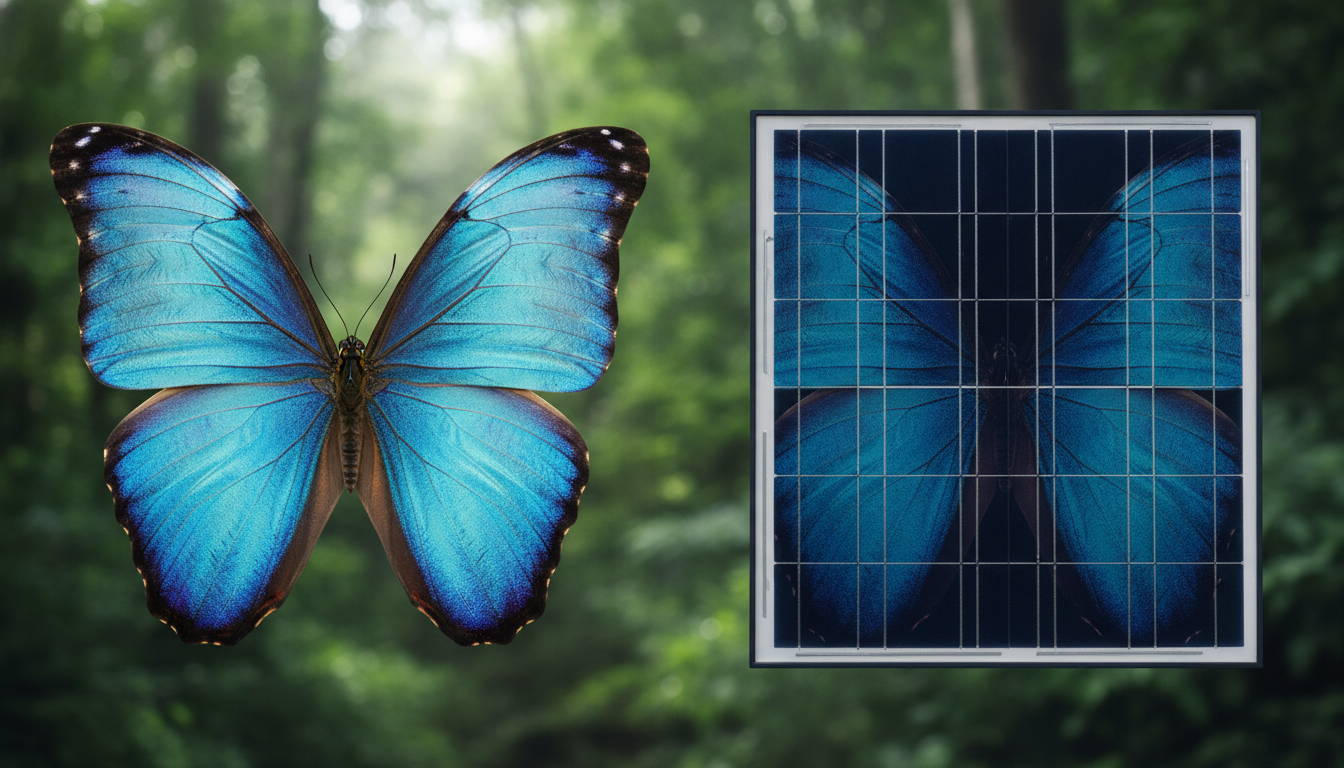
Studying animal abilities is not just an exercise in admiration — it’s one of the most productive sources of technological innovation. The field called biomimetics is dedicated to exactly this: learning from solutions that evolution has tested and refined over millions of years.
Whether it’s the extreme resilience of tardigrades, the refined sonar of bats, the instant camouflage of octopuses, or the quantum navigation of migratory birds, each of these abilities represents an elegant response to a real survival problem. And, curiously, many of these responses are decades ahead of our engineering.
The next time you feel human technology has gone far, it’s worth taking a closer look at the backyard — or the ocean floor. Nature, in all likelihood, has already gone further.
If you enjoy curiosities about the natural world and want to keep an active and curious mind day to day, you might also be interested in tips on healthy morning routine: habits worth adopting to start each day with more energy and willingness to learn.


