
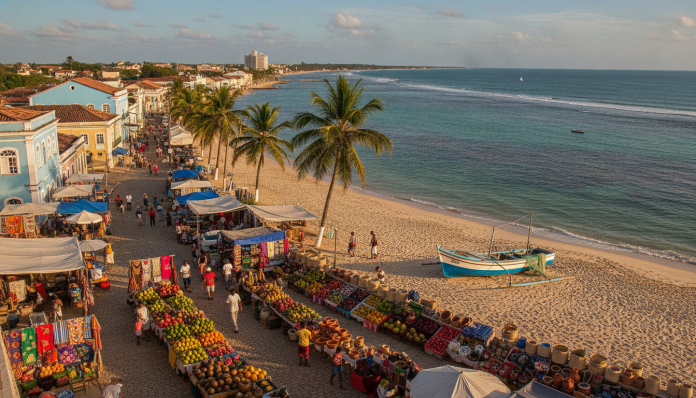
Why the Northeast is the right destination for travelers who want to travel well while spending less
Brazil has one of the most stunning tourist regions in the entire world — and it’s still underestimated by many Brazilians themselves. The Northeast brings together warm-water beaches, immense sand dunes, unparalleled cuisine, internationally renowned popular celebrations, and a hospitality that has become almost a cliché for being simply true. And the best part: it’s possible to experience all of this without emptying your bank account.
The region comprises nine states — Maranhão, Piauí, Ceará, Rio Grande do Norte, Paraíba, Pernambuco, Alagoas, Sergipe, and Bahia — and each one offers completely distinct experiences. From Lençóis Maranhenses to Trancoso, from Fortaleza to Recife, the range of options is so generous that the difficulty isn’t finding what to do, but choosing where to start. This guide will help you do exactly that: plan a smart, economical, and unforgettable itinerary through the Northeast.
Understanding the region’s cost of living
Before opening any flight booking app, it’s worth understanding the Northeast’s price structure. Generally speaking, the cost of living in inland cities and less trendy destinations is significantly lower than in major cities in the Southeast or South. Meals at popular restaurants, family-run guesthouses, and intercity bus transportation are categories where travelers really feel the difference in their wallets.
This doesn’t mean the Northeast is “cheap for everything.” Popular destinations like Jericoacoara (CE), Porto de Galinhas (PE), and Morro de São Paulo (BA) have prices that rival other established tourist spots in the country, especially during peak season. The logic is simple: the more famous the destination and the closer to peak season, the higher the cost. That’s why planning strategy makes all the difference.
When to go: the secret lies in low season
The rainy season in the Northeast varies considerably by state. In Ceará, Piauí, and Maranhão, the rainiest period runs from January to May; in Pernambuco, Alagoas, and Bahia, it concentrates between April and July. Interestingly, rain in much of the region is fast, intense, and followed by sunshine — which doesn’t necessarily ruin your trip, but significantly reduces prices.
Traveling between May and August to the Ceará or Rio Grande do Norte coast coincides with the dry season and constant winds, making these months perfect for practicing windsurfing and kitesurfing — sports that attract visitors from around the world to places like Cumbuco and Taíba. For Lençóis Maranhenses, the ideal period is between July and September, when the interdune lagoons are full thanks to the rains from the first half of the year.
Practical tip: avoid Carnival weeks, New Year’s Eve, and July on the most famous beaches. Prices can double or triple, and overcrowding compromises the experience.
Building your itinerary: where to start
The ideal starting point depends on three factors: your city of origin, available time, and the type of experience you’re looking for. For those with 7 to 10 days, the suggestion is to concentrate your itinerary on two or three nearby destinations instead of trying to cover as much as possible. Traveling in a rush is tiring and expensive.
Suggested 7-day budget-focused itinerary
- Days 1 and 2 — Arrival in Fortaleza (CE): capital well-served by flights, including several connection options. Explore the Central Market, Praia do Futuro, and local gastronomy. Budget-friendly lunch guaranteed at tapioca stands and self-service restaurants downtown.
- Day 3 — Canoa Quebrada or Morro Branco: destinations less than 3 hours from Fortaleza by regular bus. Cliffs, dunes, and less crowded beaches.
- Day 4 and 5 — Jericoacoara: the trip from Fortaleza takes about 4 hours. Stay at simple guesthouses outside the village center to save money. The sunset at Dune of the Sunset is free and unforgettable.
- Day 6 — Return to Fortaleza and rest: take the opportunity to try fresh seafood at the waterfront kiosks.
- Day 7 — Return flight: depart with your luggage full of memories and, if possible, with cashews and rapadura candy bought at the local market.
Transportation: how to get around without spending much
The Northeast has a reasonable highway network between the capitals and main tourist destinations. Intercity and interstate buses are the most economical option for long trips. Companies like Itapemirim, Guanabara, and Expresso Brasileiro operate routes between states with acceptable comfort and accessible prices.
- Rideshare apps and taxis: in all Northeast capitals, Uber, 99, and similar services work well. In smaller towns, conventional taxis still dominate.
- Shared vans: on many tourist routes, like Natal–Pipa or Fortaleza–Canoa Quebrada, shared vans depart regularly and cost much less than private transfers.
- Car rental: worth it for those wanting to explore hard-to-reach destinations like Chapada Diamantina (BA) or Serra da Capivara (PI). Compare prices in advance and pay attention to insurance deductibles.
- Regional flights: Azul Airlines historically has good coverage in the Northeast, connecting smaller cities like Petrolina, Campina Grande, Mossoró, and Aracaju.
Food: eating well while spending less
Northeast cuisine is a cultural and gastronomic heritage of Brazil. The good news is that the most traditional — and delicious — dishes are among the cheapest. A plate of green beans with dried meat, cassava, and rice at a popular restaurant in many inland cities costs amounts that surprise any Southeast traveler.
Items that must be on your list:
- Baião de dois (green beans with cheese curd and bottled butter)
- Northeast cornmeal with farm-fresh eggs
- Tapioca with cheese, coconut, or dried meat
- Bahian fish stew (Bahia)
- Goat tripe stew (for the adventurous, especially in the interior)
- Pernambuco cartola (fried banana with cheese curd and cinnamon)
- Candied coconut, peanut brittle, and cashew candies as desserts or quick snacks
Open-air markets are the most economical places to eat and buy groceries. Caruaru Market (PE), recognized by IPHAN as cultural heritage, and São Brás Market (BA) in Salvador are mandatory stops both for the experience and the savings.
Accommodation: from family guesthouses to strategic hostels
The accommodation market in the Northeast is vast and varied. For budget-conscious travelers, the best options are:
- Family-run guesthouses in the interior: cost a fraction of resort prices and offer personalized service, regional breakfast, and local tips no guide can provide.
- Hostels in the capitals: Fortaleza, Recife, and Salvador have good hostel offerings well-rated on platforms like Hostelworld and Booking. Private rooms in hostels balance cost and privacy.
- Seasonal rentals: for groups or families, renting a house through specialized platforms can be cheaper than booking several hotel rooms, especially in cities like Maragogi (AL) or Itacaré (BA).
Attention: book well in advance for peak season periods. In July and Carnival, availability disappears quickly in popular destinations.
Alternative itineraries: the Northeast few know
For those who have already visited classic beaches and want to go beyond, the Northeast holds destinations not yet taken over by mass tourism — and that, because of this, are even more accessible.
- Serra da Capivara (PI): UNESCO World Heritage Site since 1991, home to rock paintings over 25,000 years old. Tourist infrastructure is simple, prices are low, and the experience is on another level.
- Chapada do Araripe (CE/PE): border between the two states, with waterfalls, trails, and unique paleontological sites in the world. The city of Crato (CE) serves as a base and has a very low cost of living.
- North Coast of Paraíba: beaches like Baía da Traição and Lucena still preserve the peaceful atmosphere and accessible price that Pipa lost some years ago.
- Penedo (AL): historic city on the banks of the São Francisco River, with well-preserved colonial architecture and practically no crowds.
Artificial intelligence can also be an ally in this planning: AI tools help compare routes, organize itineraries, and find accommodations compatible with your budget — something that saves hours of research.
Conclusion: planning is the biggest savings of all

Traveling through the Northeast with financial intelligence doesn’t require giving up anything that really matters. It does require choosing the right time, researching transportation and accommodation options in advance, eating where locals eat, and resisting the temptation to focus your itinerary only on the most Instagram-worthy destinations.
The region has much more to offer than its most famous beaches — and it’s precisely in the less obvious corners that costs drop and authenticity appears. With solid planning, it’s perfectly possible to spend ten days in the Northeast with comfort, safety, and experiences that will last in your memory much longer than the balance you preserve in your account.
Start by choosing an anchor destination, map out the accessible surroundings from it, and build your itinerary from the inside out. The Northeast will welcome you — as it always does — with open arms.


